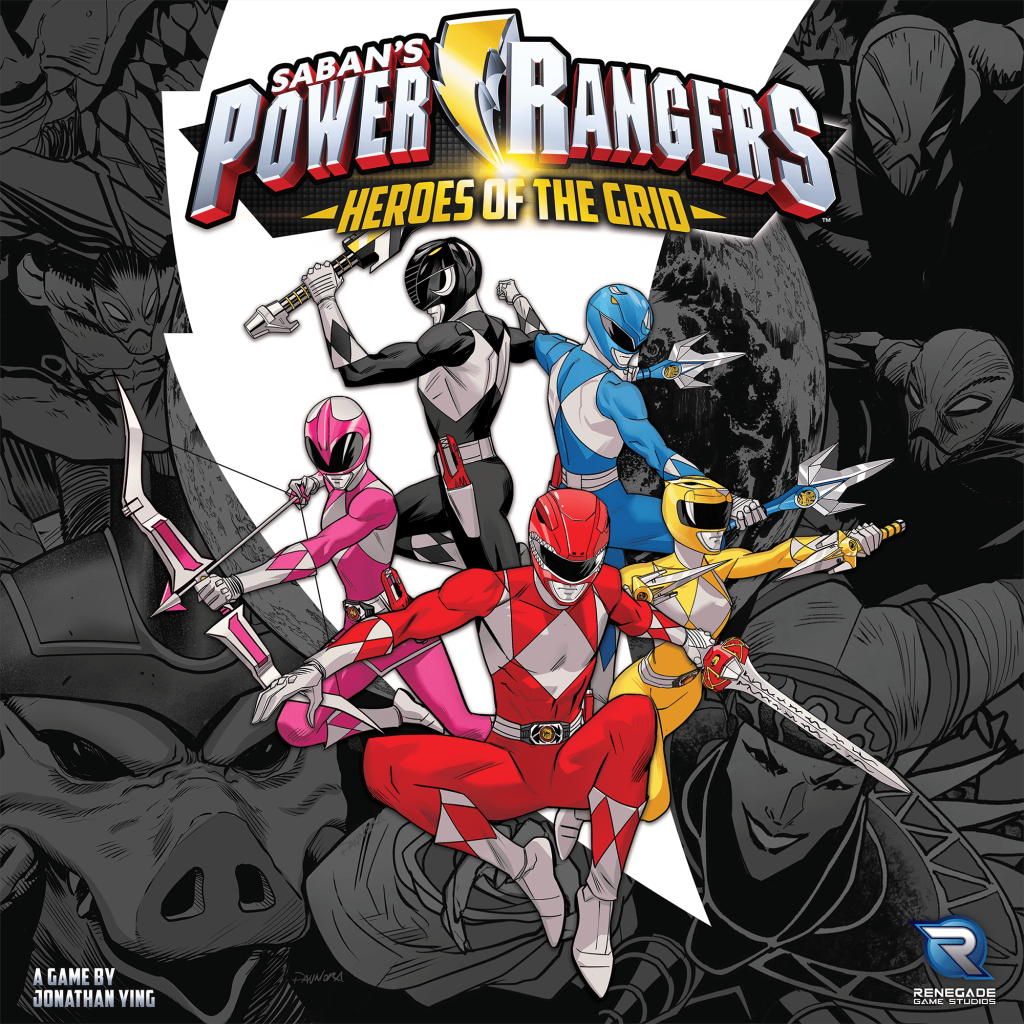
Details
Game Designer: Jonathan Ying
Artist: Dan Mora
Publisher: Renegade Game Studios
Player Count: 1-6
Estimated Play Time: 45-60 minutes
Box Size: 13” x 13” x 5”
Quick Debrief
In this cooperative game, up to six players form a team of Power Rangers defending Angel Grove and various locations from the evil forces of Rita Repulsa and other bosses. Each round, enemies flood into the four outer locations surrounding the Command Center, and the Rangers spend their actions moving across the board to battle foot soldiers, monsters, and eventually, the final boss. Combat is resolved through a shared combat card system, in which each Ranger brings a unique ten-card deck to the table and the team pools their resources to fight their way through a sequence of enemy combat cards.
I’ve enjoyed Power Rangers: Heroes of the Grid over the years. The combat system is straightforward, easy to teach in minutes, and layered enough to generate genuine team-driven decisions. Each Ranger plays differently, the team coordination is satisfying, and the escalating pressure of watching locations creep toward panic creates the right amount of tension. My one ongoing frustration is the dice combat system. Damage output on the Ranger attack cards is determined by rolling dice, and the dice can be unkind with their rather low hit rate leading to turns that evaporate through no strategic fault of my own. It doesn’t break the game, but it sometimes tests your patience.
Current Status: Useful Gear (Want to Play Again)
Overall, I recommend this game to fans of cooperative games, and especially, of Power Rangers. A game session can run under an hour without sacrificing the feeling of a real tactical fight. If you can make peace with the dice randomness, there’s an opportunity for some genuinely exciting team-based moments. Simply put, if you’re a fan of Power Rangers, you are probably willing to give this game a shot.
⬇️ Keep reading for my full thoughts ⬇️
Initial Observations
Power Rangers: Heroes of the Grid is the game that started my interest in the modern board game hobby as well as crowdfunding board games. The Power Rangers franchise was a key part of my childhood and seeing the opportunity to take on the role of the original Mighty Morphin Power Rangers with friends was a huge selling point.
This game’s Kickstarter campaign ran in 2018, and my immediate pledge was driven by pure nostalgia. I love that the miniatures are large and colorful like the Rangers are known for, and the swarms of putty patrollers immerse you into the rising pressure to save the city from evil monsters like Knasty Knight and Eye Guy.
I received the core game and Kickstarter exclusive deluxe boxes in the original crowdfunding campaign and subsequently picked up many more expansions in subsequent crowdfunding campaigns. My collection also includes:
- Megazord Deluxe Figure
- Rise of the Psycho Rangers
- Cyclopsis Deluxe Figure
- Mega Goldar Deluxe Figure
- Villain Pack #1
- Villain Pack #2: Machine Empire
- Villain Pack #3: Legacy of Evil
- Zeo Ranger Pack
- Zeo Gold Character Pack
- Rangers Allies Pack #1
- Legendary Rangers: Forever Rangers Pack
- Legendary Ranger: Tommy Oliver Pack
- Squatt & Baboo Character Pack
- Fan Appreciation Kit
- Ranger Dice Set
Gameplay
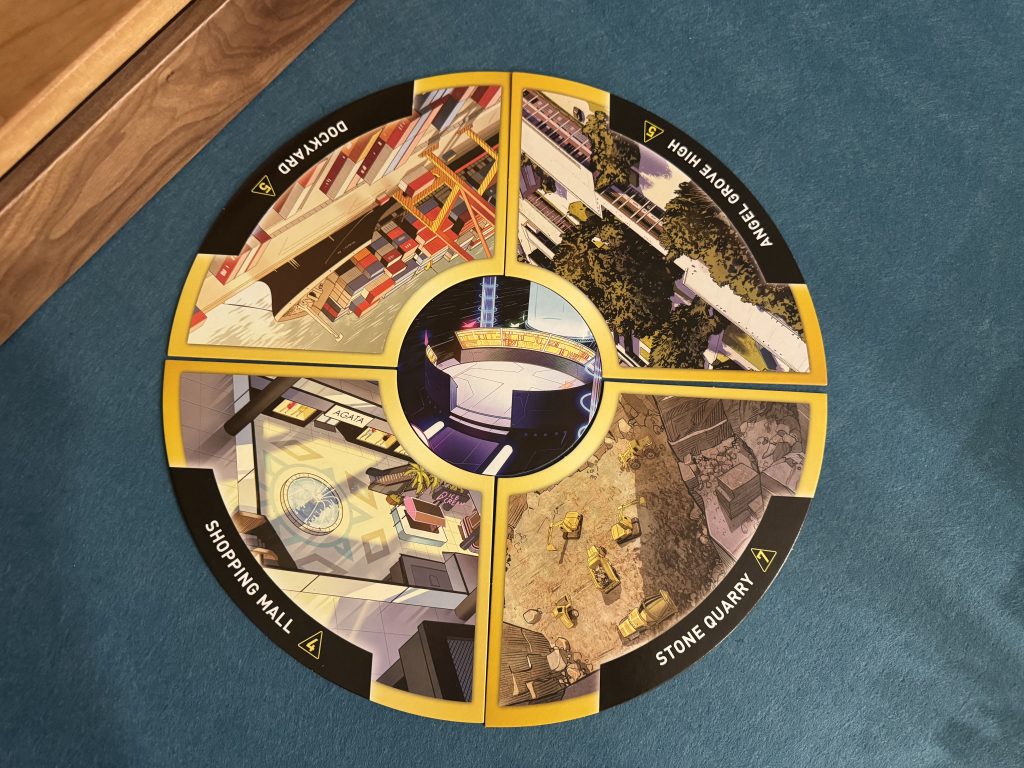
The structure of Heroes of the Grid is simple. Each round begins with a Deployment Phase, where you flip through a foot soldier deployment deck to populate the four outer locations which may include iconic locations such as Angel Grove High and Ernie’s Juice Bar. Foot soldiers are the most common enemy type but, eventually, monsters and the boss will show up to cause trouble. The deployment deck is constructed during setup in a specific order, with monster and boss deployment cards randomly seeded such that they will appear in later rounds. You know things are going to get worse. The question is how fast, and whether you’ll be ready.
Once enemies are deployed, the Rangers act freely during the Action Phase, with no defined turn order. Each Ranger has at least two action tokens (three or five in some player count configurations). Matching the simple round structures, Rangers have three available actions: Move, Battle, and Recover. Move allows a Ranger to go to any location on the board. Recover lets a Ranger pull cards back from their discard pile (up to six shields’ worth) and shuffle them into their deck. This is a crucial action because you use your deck to manage damage from enemies. And Battle is where the action lives.
When a Ranger initiates a battle, every Ranger at that location participates. Two energy tokens are added to a shared resource pool, each Ranger draws up to their five-card hand limit, and the enemy cards are revealed. Foot soldiers in the location draw one card from their enemy deck, while the stronger monsters and bosses draw four cards from their unique decks. These cards are laid out in a specific combat sequence forming two rows of threats you need to work through as they resolve to cause trouble for the Rangers.
The battle sequence consists of Rangers and enemies alternating turns. On the Rangers’ turn, the team picks one Ranger to play a card from their hand, paying its energy cost from the shared and/or their personal resource pool. Attack cards target an enemy card in the sequence and deal hits, usually by rolling dice. Maneuver cards give you energy, manipulate your deck, or offer other useful effects. Reaction cards can be played at any time by any Ranger in response to what’s happening.
The combat sequence resolves from left to right on the enemy side and the order and arrangement of cards in the two rows matters. The enemies often use keywords, which are one of the game’s thematic design features. Fast cards force the enemies to act first, which can completely reshape the Rangers combat plan before anyone has played a single card. Guard cards protect cards horizontally and vertically adjacent from being targeted directly, limiting the Rangers potential attack targets. Passive cards give ongoing effects that can compound into serious pressure if not addressed and often thematically align with the enemy’s special abilities. Learning to read the combat sequence before committing your hand is where the game’s strategic depth lives.
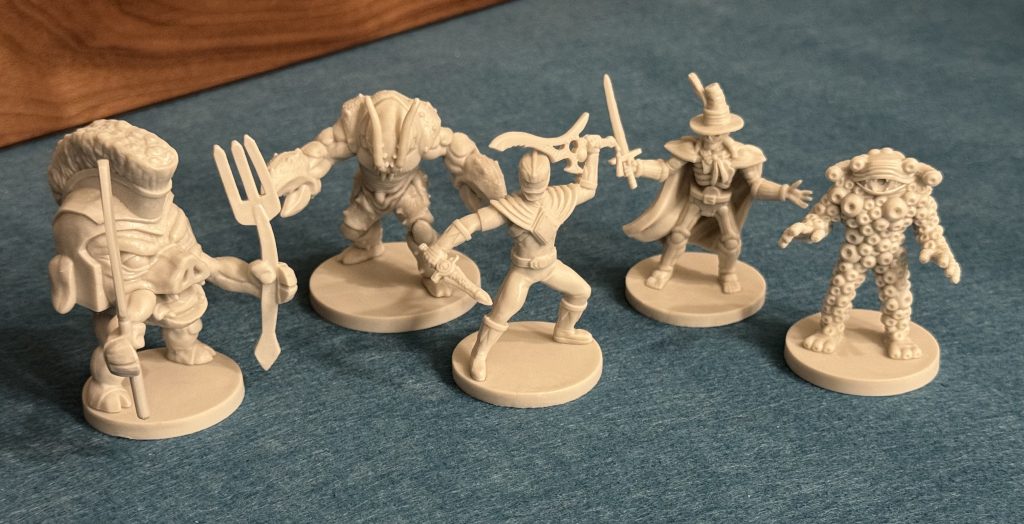
Damage defense works through a revealing mechanic that I think is quietly clever. It is reminiscent of how wounds are applied in Mage Knight: The Board Game. Rangers don’t have hit points or a specific amount of health. Instead, when a Ranger takes damage, they flip the top card of their deck and check its shield value against the incoming damage. If the shields are greater than the damage, the card goes to the bottom of the deck. If not, it gets discarded. If there is any damage remaining, you flip the next card and continue the process. You’re burning resources to stay alive, which makes deck management feel genuinely consequential, especially with only ten cards in your Ranger deck. This often leads to turns where the Recover action isn’t just a nice idea, but a must for survival.
The Power Rangers iconic Megazord has also been incorporated into the game. Defeating foot soldiers earns the Rangers’ experience, and filling the experience track summons a Zord card, advancing the Power Marker and giving a Ranger a new ability. This progression also gets the Rangers one step closer to deploying the Megazord. Rangers also get a free level-up on the power track and receive a Zord card every time they defeat a Monster.
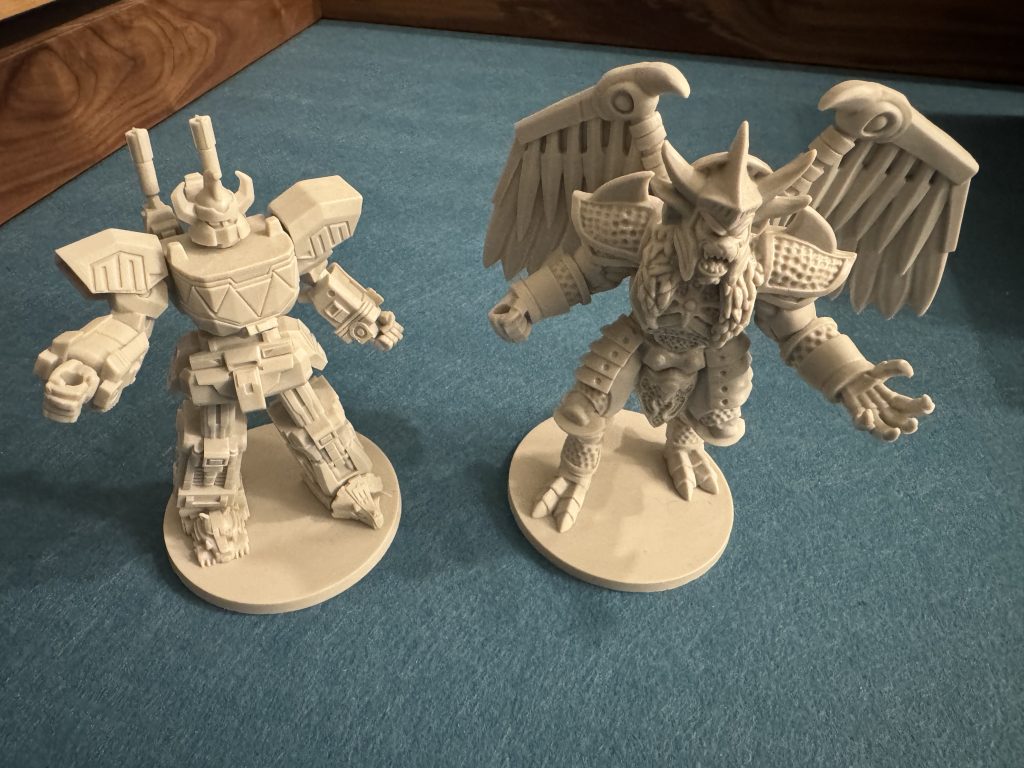
But the challenge only grows as tougher enemies arrive on the board. Monsters require defeating four of their enemy cards across one or more battles. And the boss (Rita Repulsa in the core game with multiple options to choose from in expansions) requires defeating six enemy cards. You’re not going to end this game in one big fight. You’re going to fight the boss multiple times, chip away at their card pool, and hope the rest of Angel Grove holds together long enough to finish the job. When you’ve defeated the boss, the Rangers have won the game!
Field Testing and Replayability
I’ve played this game with one to five players and I enjoyed every player count. Each Player count does change the feel of the game and the urgency to clear locations of enemies before it becomes panicked. At five players, it feels very thematic, like a full team that can create a lot of discussion during combat, particularly when energy is scarce and every card choice matters. Higher player counts also have more flexibility to divide into smaller teams to battle enemies. However, at one and two players, you’re controlling multiple Rangers simultaneously with a hybrid combat deck, which I’ve found can be more complex but also gives you a greater number of choices on your turn.
Every Ranger plays genuinely differently. In the core box, Jason Lee Scott, Mighty Morphin Red, has the Power Sword combat card which is a huge five-dice attack that adds dice to the next Ranger’s attack after resolving his own that combines well with his ranger ability to allow dice rerolls. It rewards sequencing and teamwork. Billy Cranston, Mighty Morphin Blue, has multiple combat cards that trigger special effects when revealed for defense making him adept at blocking damage. Kimberly Ann Hart has the Quick Shot ability that deals one hit to an enemy of her choice at the start of each battle and her Arrow Shot card bypasses the GUARD keyword, making her a strong choice against guarded enemy card sequences. Trini Kwan’s Double Strike ability lets her play two copies of the same card in a single turn once per battle, which enables burst turns before the enemies get another swing. Zack Taylor’s Hip-Hop Kido ability and multiple of his combat cards allows him to splash damage to adjacent enemies, which chains beautifully against clustered enemy cards.
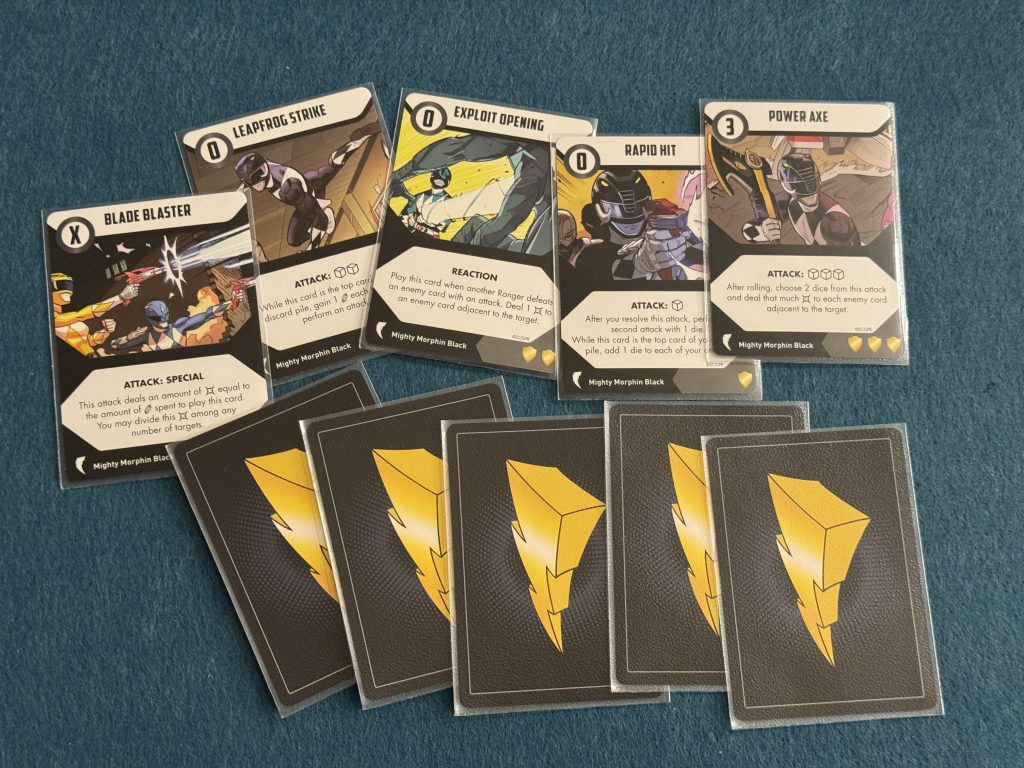
Not only is combining these abilities in a battle fun, but designing your team is exciting. For fans of the franchise, there is something both uncanny and exciting about mixing Rangers from different seasons of the show or playing with different iterations of the same Ranger. The variety of combinations means this game can be replayed as a unique experience each time and keeps me excited to play through different expansions and add-on content.
While there is plenty of variability in the team composition, deployment deck, enemies, and dice rolls, I feel that there are common themes you learn as you play more and more games. There is a rhythm to the enemy deployments and pacing you develop in order to get your Zord cards out before the boss arrives. I like to think of the power track as more than a progress meter. It’s telling you how ready you are for the monsters and boss. Because locations have figure limits leading to the panicked condition (one of the loss conditions), you are forced to clear out some foot soldiers and monsters first, building up your bank of Zord abilities, all while preparing yourself for the final boss.
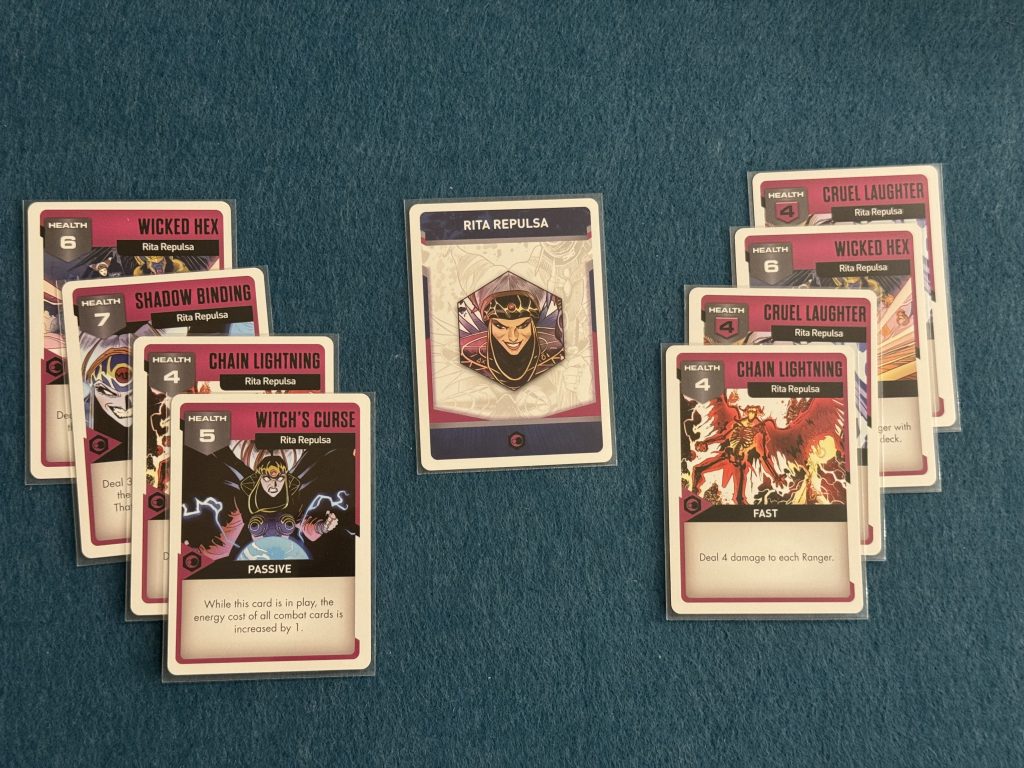
Additionally, you can ramp up the difficulty by facing tougher bosses like Cyclopsis or Mega Goldar that add new twists to the enemy card sequence. You can even add additional monster and boss cards to the deployment deck or check out the special bonus scenarios designed to give you pre-constructed setups with special rules. And if you need to tone down the challenge level, you can cut back on the number of enemies deployed each round or give the changes more energy.
Notable Discovery: The Deployment Deck
The deployment deck is the game’s simple, yet effective design gem. It can also be a stress inducing menace. First, structured into four piles of foot soldiers, monsters shuffled randomly into the middle two piles and the boss into the last. This means every game has an escalation arc built in from the moment you sit down. You know the boss was shuffled in pile D, you can’t stop it from coming. Additionally, you don’t know when exactly the boss will show up or which location board it will land on.
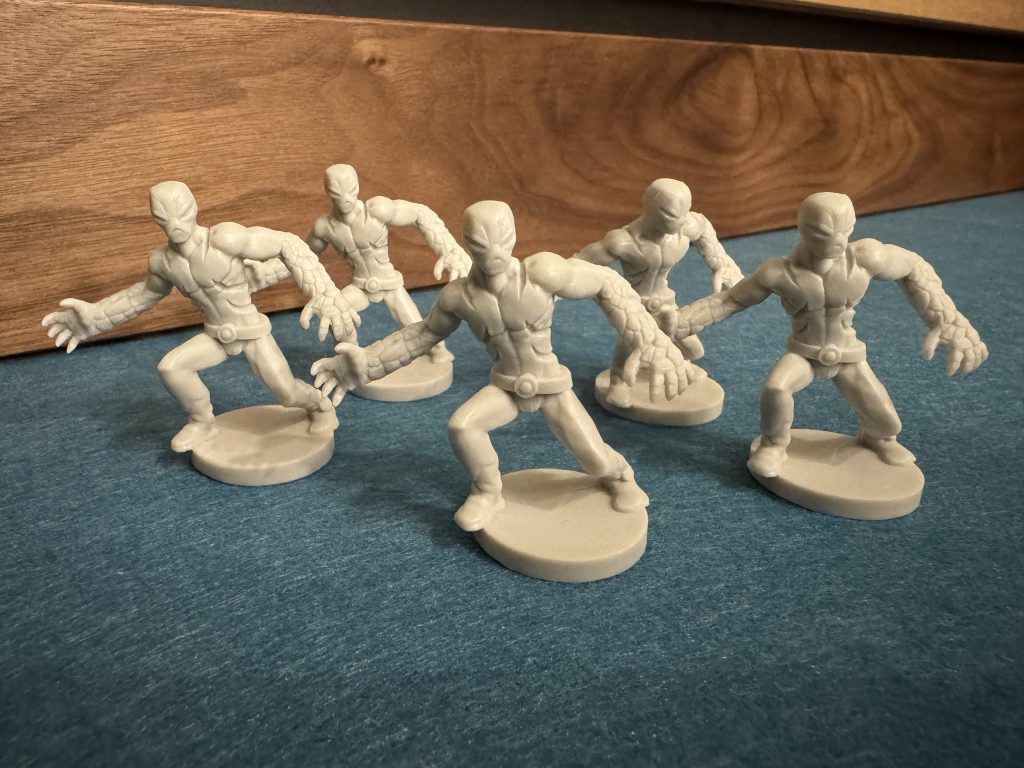
The moment a monster deployment card appears is when the tension spikes. When Pudgy Pig or Madame Woe lands on the board, that location instantly panics. Now you have a ticking clock: fight through that location’s foot soldiers, then face the monster across as many battles as it takes to knock out four of its cards, without losing the rest of Angel Grove to panic in the meantime. The board pressure and the battle pressure operate on two different clocks, and managing both simultaneously is the game’s best aspect.
Notable Discovery: The Zord Cards
The Zord system is lean, but effective. The designer cleverly incorporated the iconic robots of the series as powerups into a game largely based on the rangers fighting at the ground-level instead of alongside giant monsters and skyscrapers.
There are five regular Zord cards, one per your standard team of five Rangers, plus the Megazord card at the bottom of the deck. You summon them regularly by filling the experience track with defeated foot soldiers or by defeating a monster. Each summoned Zord gives the associated Ranger a powerful, new ability they can exhaust once per round. The Saber-Toothed Tiger lets each participating Ranger draw up to two cards in combat. The Mastodon can remove a foot soldier and add it to the experience track. The Dragonzord can spread excess damage to another enemy card.
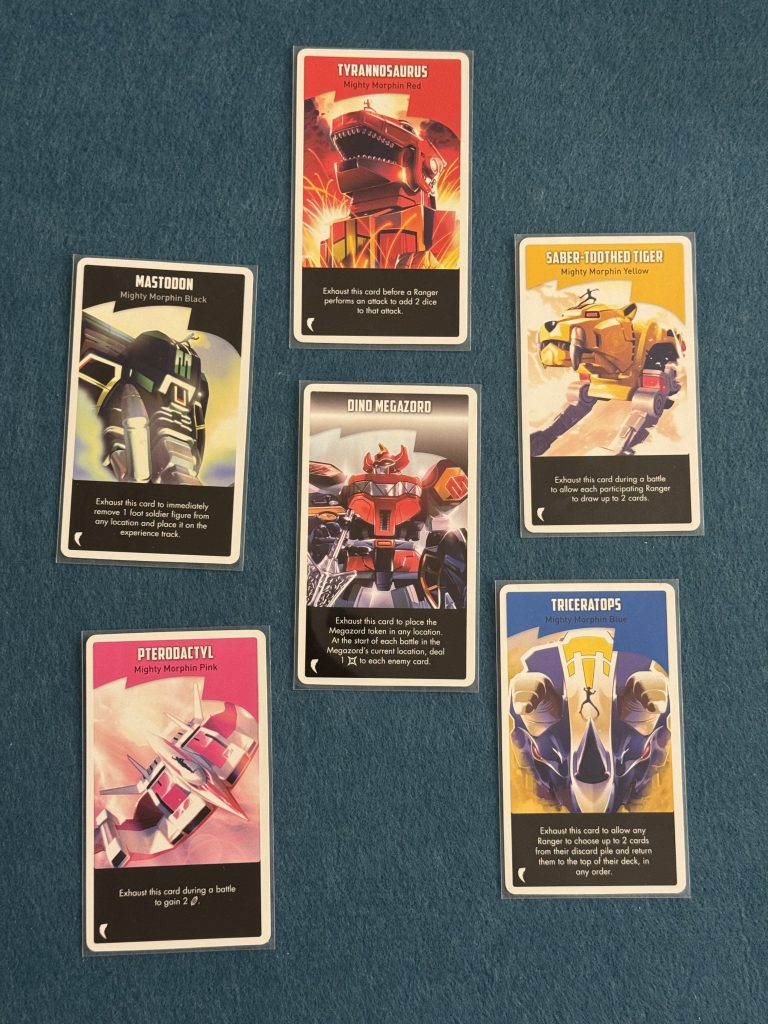
What makes the Zord system work is the buildup. Just like the deployments are working on a clock, the Zords are arriving on a similar yet different timing system. By the time the Megazord arrives, you’re playing a meaningfully different game than you were in round one as you’ve defeated plenty of enemies and are likely ready to take down the boss. And the Megazord’s ability provides the kind of dramatic swing that can motivate a team of Rangers by dealing damage to every enemy card.
Observer’s Notes
Power Rangers: Heroes of the Grid was the game I cited in my Grimcoven review when I talked about dice randomness done the wrong way. I want to be fair to it here, because the comparison wasn’t a dismissal. The praise throughout my review is real and so is this frustration. Attack combat cards often specify a number of dice to roll, and the hits you deal are whatever the dice produce. Some turns you roll five dice and get two hits. Some turns you roll three dice and get five hits. The variance is wide enough that occasionally a well-constructed turn just fails, and the enemy sequence marches forward with guaranteed damage while your hand and deck empties.
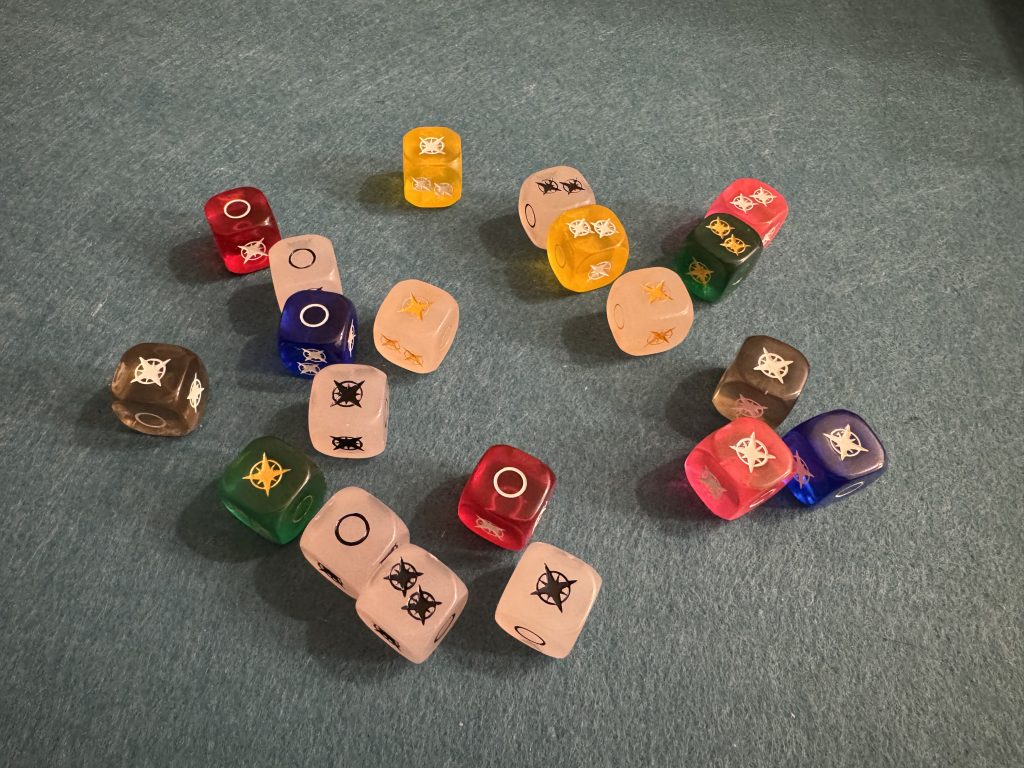
Grimcoven and Dragon Eclipse both solve this problem in different ways: fixed damage values tied to specific die symbols, or no offensive randomness at all. Heroes of the Grid sits in an older board game design tradition where dice rolls determine damage. It’s not a dealbreaker, and the combat sequence’s transparency helps you pre-plan around potential bad rolls. But it is something to consider, especially with players who get frustrated by randomness.
Field Report Summary
Current Status: Useful Gear (Want to Play Again)
- Rules Accessibility: One of the most approachable cooperative games I own. The round structure is two phases, combat is four steps, and the back of the rulebook contains all the icons and keywords you need to know. A new player can be up to speed after their first combat.
- Replay Potential: Each Rangers play differently enough to warrant revisiting the game with different team compositions. The deployment deck’s randomized monster placement ensures no two games unfold quite the same way. And the plethora of expansion content adds additional Power Rangers, new monsters and bosses, and new Zord cards to satisfy any craving for more content.
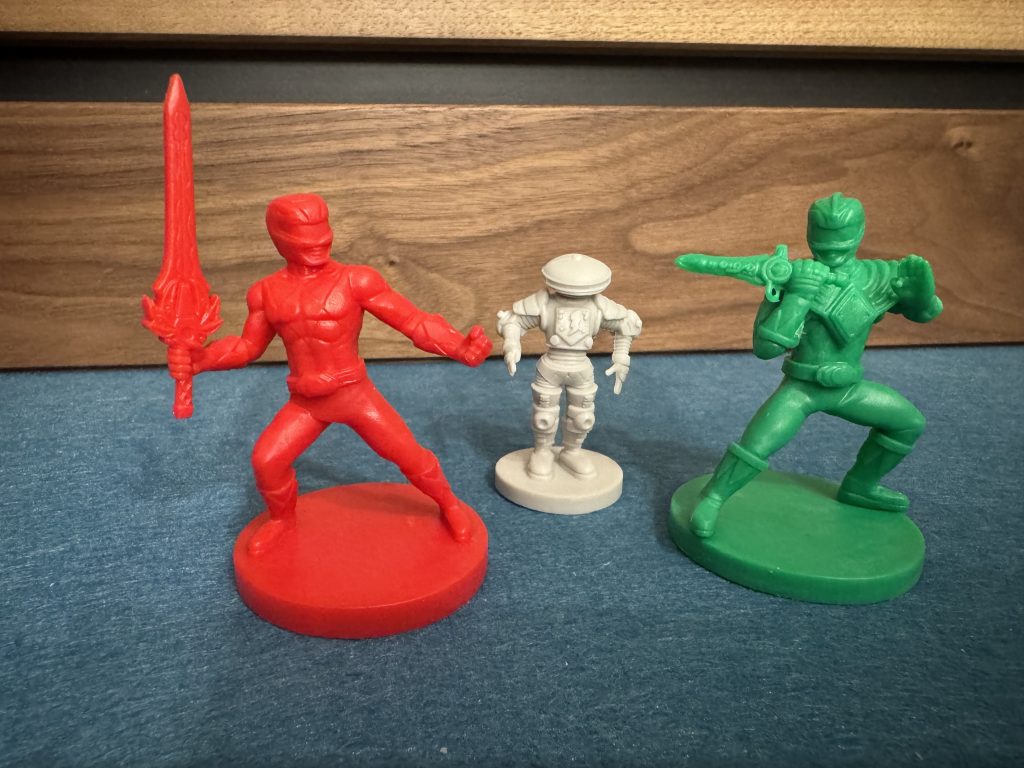
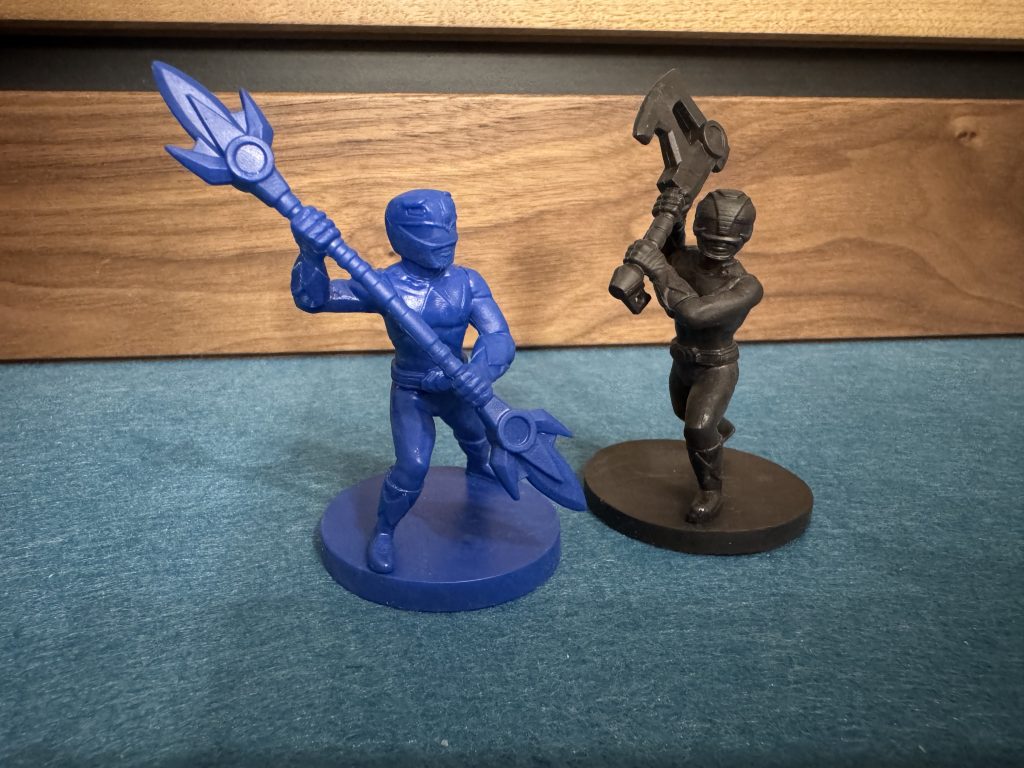
- Components: Dan Mora’s art stands out and evokes the fun superhero theme that is the Power Rangers franchise. The card quality is solid and the miniatures provide a nice table presence. The location boards are easy to navigate and overall provide an efficient use of table space.
- Time Investment: Sixty minutes is accurate for an experienced group. Early game sessions might run longer as you learn the flow. Setup and teardown are both quick, but with all the expansions, you can lose time simply choosing your preferred combination of components.
- Portability: While it can be challenging to travel with everything, you can easily fit everything you need for a game in the medium-sized core box with room to spare. Simply pick and choose a few expansions to bring with you when traveling for game night.
- Recommended Team Size: Two to three players is my favorite, but all player counts work well.
Leave a Reply