Details
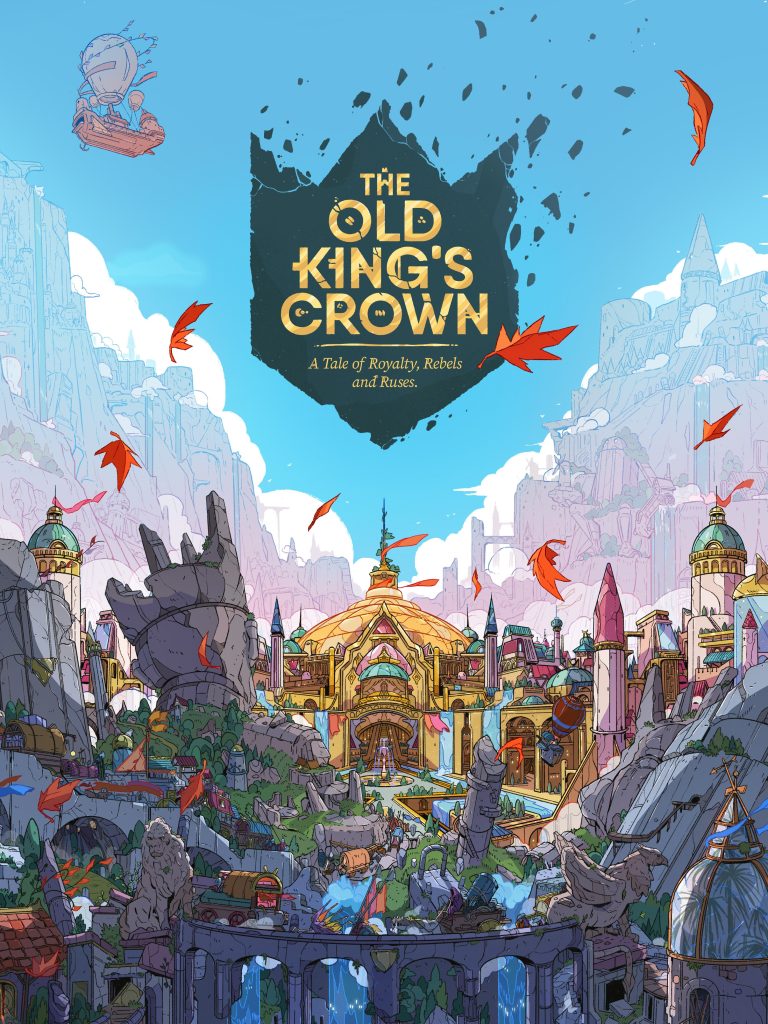
Game Design & Art: Pablo Clark
Publisher: Eerie Idol Games
Player Count: 1-4
Estimated Play Time: 60-120 minutes
Box Size: 13in x 10in x 4in
Quick Debrief
In this asymmetric betting and bluffing game, two to four players take on the roles of heirs to a fractured kingdom, each commanding a unique faction vying for influence. You win by accumulating the most Influence tokens across a series of rounds, each representing a year of political and military struggle. The core mechanism is blind bidding, simultaneously playing face down cards to contest regions of the map, bidding on powerful Kingdom Cards, and bluffing your opponents into costly mistakes. Simple stakes with a surprisingly deep decision space.
I’ve really enjoyed The Old King’s Crown. Pablo Clark’s painterly illustrations on large tarot-sized cards pulled me in before I even knew the rules, and the game more than delivered on that first impression. The seasonal structure gives each round a satisfying rhythm, and the face down card system generates the kind of tension that makes you replay every decision in your head afterward. My one concern is the potential for random outcomes to frustrate players who take losses personally, something to keep in mind when choosing your game group.
Current Status: Useful Gear (Want To Play Again)
Overall, it’s a strong addition to my collection and I’d recommend it to fans of blind bidding, asymmetric strategy, and games that reward reading your opponents. If you’re comfortable with calculated risk and you enjoy the cat-and-mouse of predicting what someone else will do, there’s a deeply satisfying game here.
⬇️ Keep reading for my full thoughts ⬇️
Initial Observations
Pablo Clark’s painterly and atmospheric illustrations on large tarot-sized cards were what drove me to learn more about The Old King’s Crown. I was hesitant about betting and bluffing with face down cards, but the clean design and easy to understand battle mechanics kept me interested. I also enjoyed watching Pablo Clark’s livestreams as he drew new art for the game. I backed The Old King’s Crown on Kickstarter in November 2023 and received the base game and the Wild Kingdom expansion. As a Kickstarter backer, I also received a metal active player token.
Gameplay
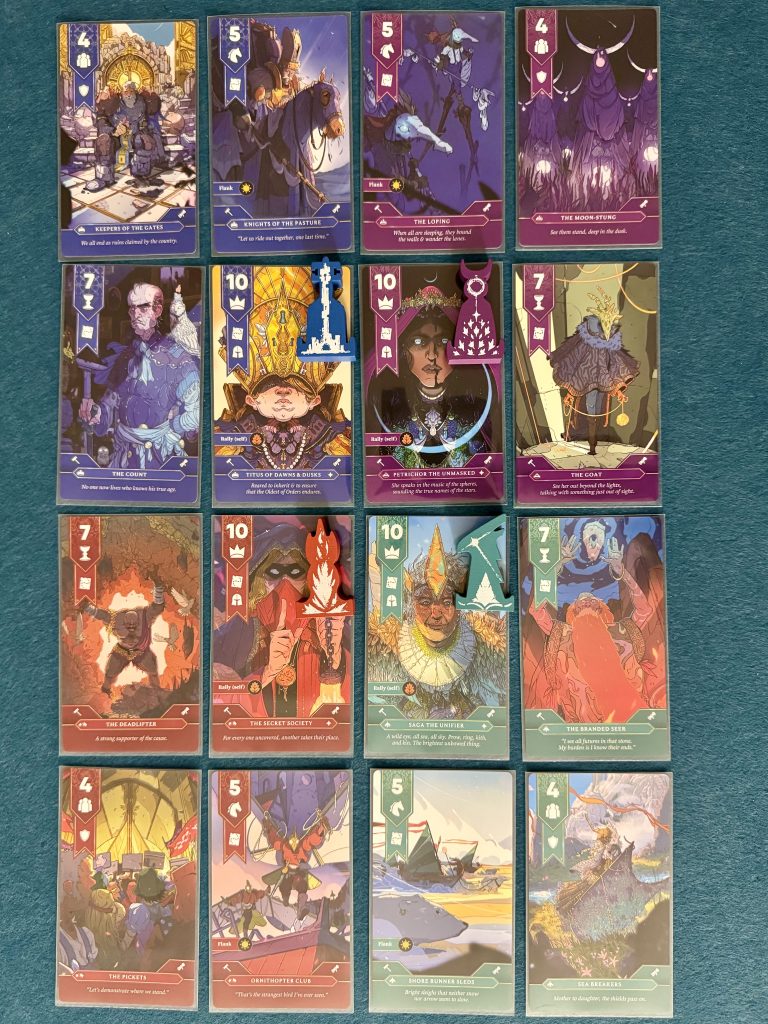
At first glance, the massive Kingdom Board feels daunting despite its beautiful art. The board doubles as a window into the kingdom and your guide through the game structure, walking you through each season of every round. You take on the role of an heir to the kingdom with a faction by your side (the Nobility, the Clans, the Uprising, or the Gathering). Each faction shares similar card types but comes with unique Tactic abilities and unlockable Advanced Faction Cards that make each feel genuinely distinct from the start.
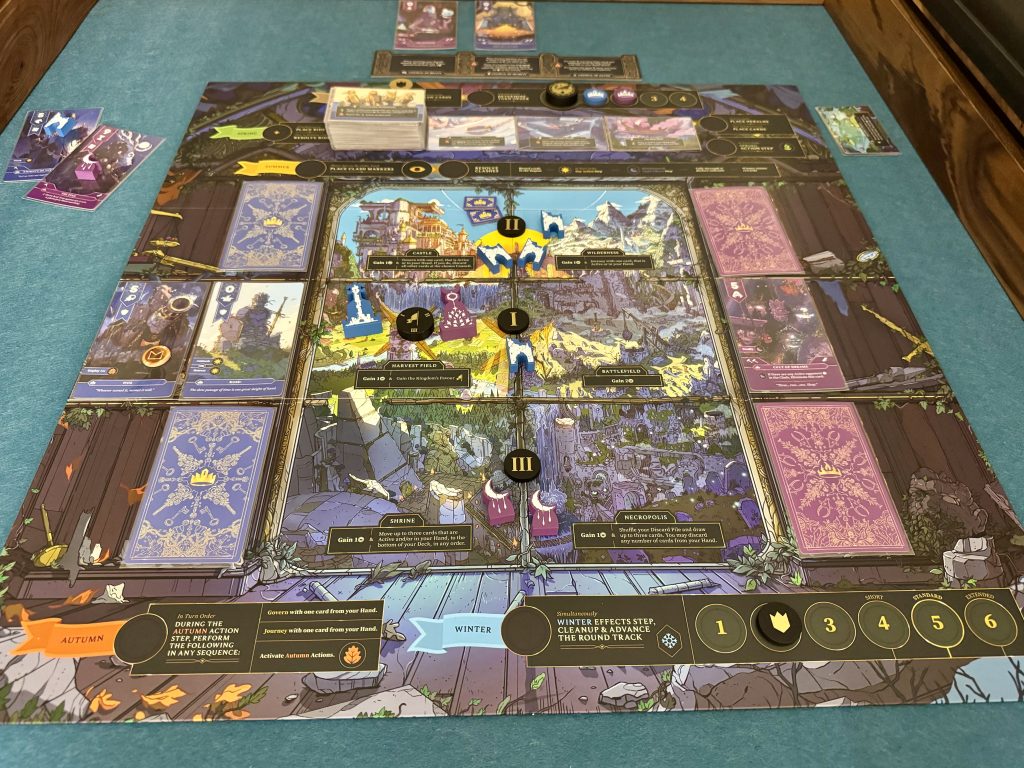
Thematically, each round represents a year of conflict, and that framing carries through the mechanics. Seasonal abilities only activate in the phase they’re tied to (Spring, Summer, Autumn or Winter) which makes the annual concept feel meaningful rather than decorative.
The heart of the game is simultaneously playing cards face down. You use this mechanic to bid on Kingdom Cards, a deck of unique abilities and benefits acquired either by winning bids or stealing from other players. You also place three Faction Cards face down beside each region (the Highlands, the Plateau, and the Lowlands). Adding to the tension, the player last on the order track decides the sequence in which each regional clash resolves. Each Faction Card has a strength value, commands, and traits that determine how it behaves in battle, and some abilities trigger in player order while others resolve simultaneously. Predicting what your opponent will play while also choosing the ideal flip sequence for your own cards creates a wonderfully layered decision space.
There’s a second layer of bluffing even before cards are placed. Placing your Herald, a bonus-granting piece that can also steal points, telegraphs information about your intentions. Did you put your Herald on the Necropolis to recover your key cards from your discard pile? Or to lull your opponent into thinking that’s where you’ll concentrate your strongest Faction Cards? The strategic space around the Herald is rich, before the face down cards even enter the picture.
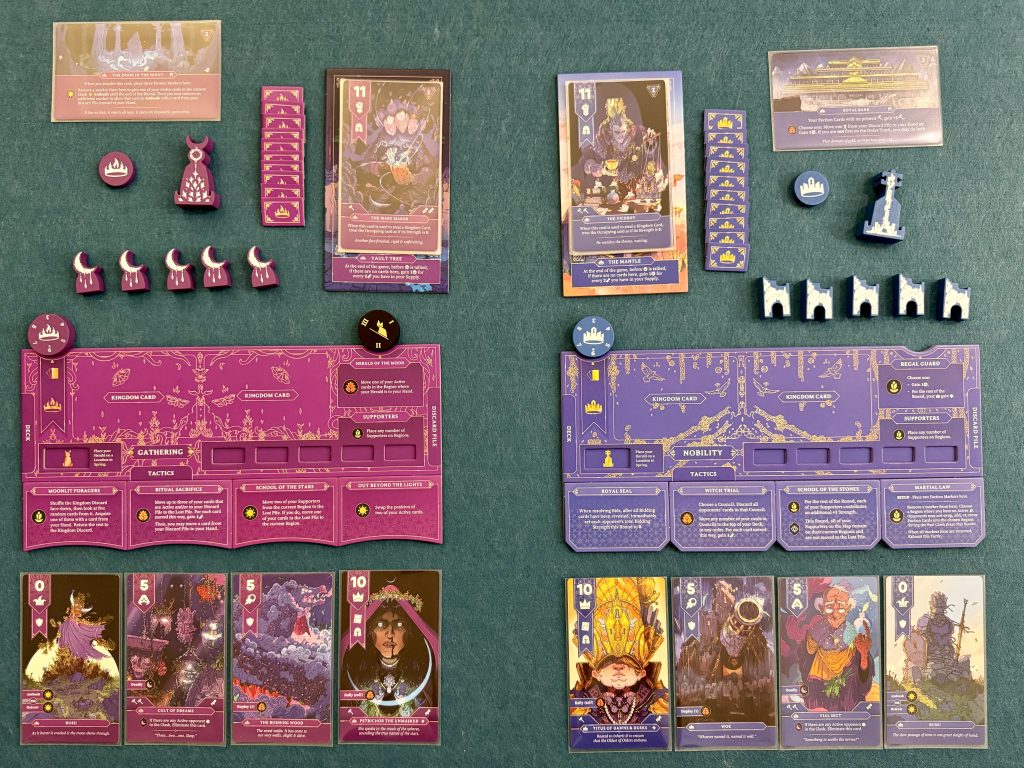
Once Summer ends and the clashes resolve, Autumn opens up a fun new game space. Players can Govern with Faction cards to activate special abilities in the various Councils. A thematic political twist useful for gaining extra Influence or recovering lost Supporters. The Journey mechanic introduces Lore, the game’s true currency. While Influence tokens may look like coins, Lore is what lets you buy your unique Advanced Faction Cards. These come with higher strength values, stronger abilities, and some arrive as HQ cards, tarot-sized cards turned sideways that grant persistent abilities. Winter, finally, is cleanup time. You reset the board, potentially lose Supporters, and see whose Faction Cards survive into the next year.
No matter how many clashes you win or how well you manage your hand, what ultimately decides the game are Influence tokens. That clear throughline keeps every decision focused.
Field Testing and Replayability
I’ve played all four factions at least once, and each felt like a meaningfully different experience. Sometimes I leaned into deploying units, ambushing opponents, maintaining a board presence with Supporters, or controlling the Councils. I don’t have a clear favorite strategy, and that’s exactly what keeps drawing me back in. Learning when to use each faction’s Tactics has been one of the game’s best puzzles. Activate them too early and your opponents may outlast you in later rounds. Wait too long and the game may end before you get the chance.
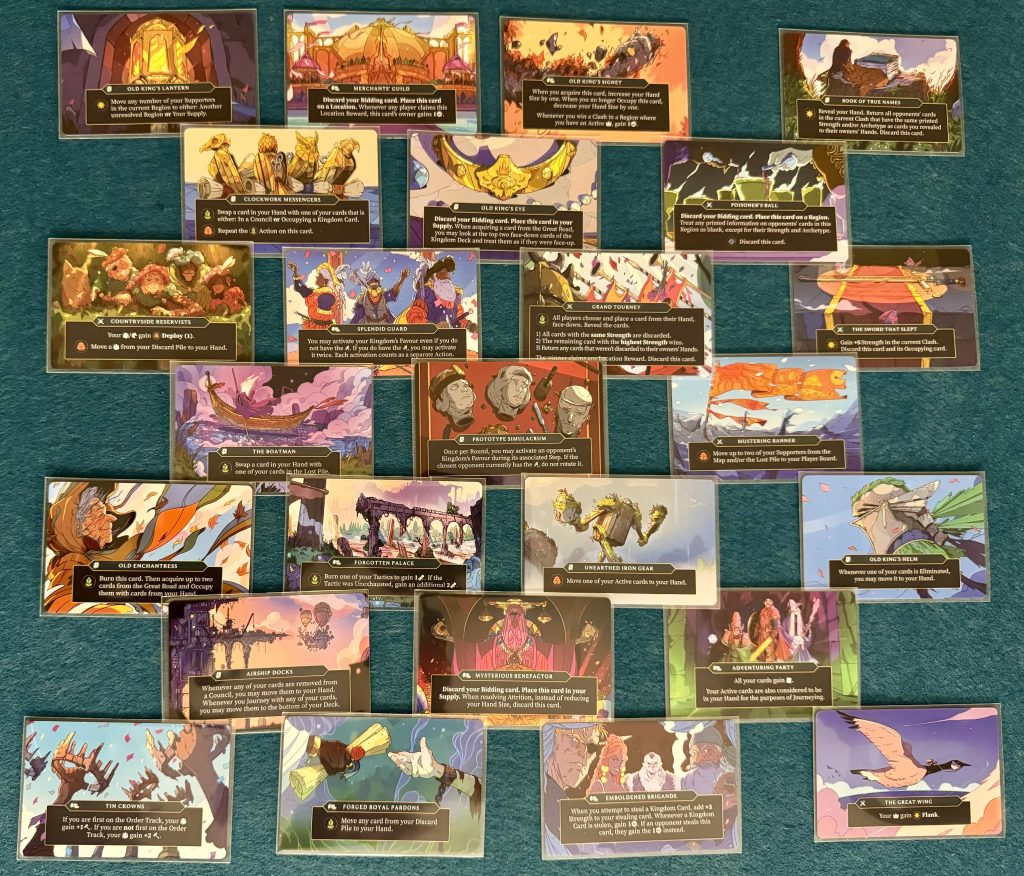
The Kingdom Cards add another layer of variability. More than once, I started with a clear plan and then changed it entirely when a new card appeared on the Great Road. A friend built a combo with two Kingdom Cards that created overwhelming chain reactions in clashes that I hadn’t anticipated. A satisfying example of how these cards can reshape the game.
One word of warning to players who lean toward cooperative games, as I do. There is a cooperative mode that pits players against the Simulacrum, but this is fundamentally a competitive game. And it’s a competitive game where you can be as ruthless as you want. There are graceful ways to win and brutal ways to dismantle your opponent region by region. Because cards are played face down, a player’s loss can occasionally come down to chance. I enjoy that element, but I’m cautious about playing with anyone who takes outcomes very seriously. The randomness inherent to predicting your opponent’s moves is part of the experience, not a flaw. But this game needs to land at the right table of players and that will limit when I play this game.
The Old King’s Crown is, at its core, a game of blind bidding. A clean, well-executed mechanism wrapped in a beautiful world with asymmetric abilities and rule-changing Kingdom Cards that keep each session feeling fresh. I’ve had close matches, including one that required a tiebreaker check. Even when a round swings in someone’s favor, the war hasn’t been decided until the very end. Managing your hand, your Supporters, and your abilities is a rewarding balance across every round.
You can also adjust the game length to fit your needs or raise the stakes and scores. You simply choose four, five, or six rounds (a short, standard, or extended game).
Notable Discovery: Kingdom Cards
The Great Road is the game’s auction house, where you can acquire unique powers by spending a card from your hand. The Kingdom Cards are where you’ll find the full variety of Pablo Clark’s art and world-building, and it’s where some of the most game-altering abilities live. There were consistently more appealing options on the Great Road than I had room for on my player board. The limit of two Kingdom Cards at a time is a satisfying constraint. Watching a well crafted combo unfold mid-game is one of the most memorable moments.
Notable Discovery: Simulacrum
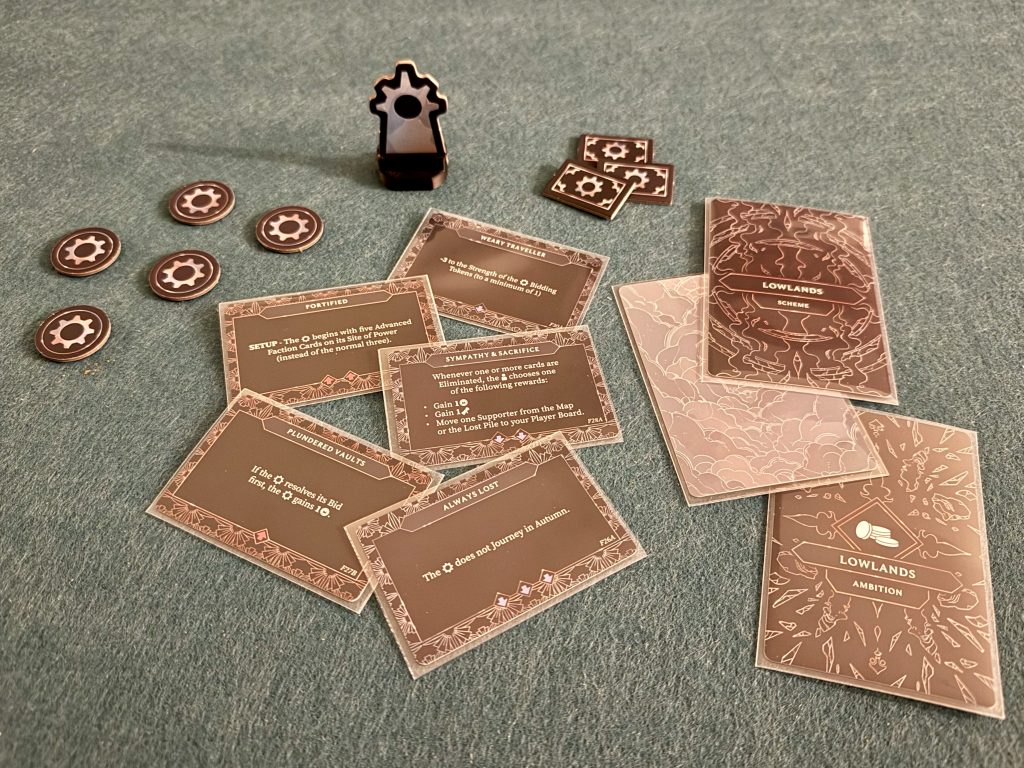
The solo mode is impressive for a game built around hidden information. Rather than defaulting to random behavior, the Simulacrum uses Threat, Fog, Ambition, and Scheme cards to emulate human tendencies, giving you a read on what it might do in each region while still forcing genuine decisions. A solo game against the Simulacrum, while challenging, feels complete rather than a workaround.
Observer’s Notes
Props to the Eerie Idol team for creating both an Introductory Strategy guide and a Teaching guide (link). The rules themselves are approachable, but developing a real strategy takes time, and these guides do a lot of work in orienting new players toward meaningful decisions.
My practical note is that I wish the game shipped with multiple copies of the physical player aids. Having only one means players share it, occasionally causing small friction in game sessions.
Field Report Summary
Current Status: Useful Gear (Want to Play Again)
- Rules Accessibility: The gameboard acts as your guide through each season of every round, and the included player aid covers the symbols and abilities found on Faction Cards well. The barrier is less about rules comprehension and more about building strategies.
- Replay Potential: Each Faction plays differently enough to warrant multiple game sessions, and the large Kingdom Card deck introduces consistent variability. Different opponents change the character of every clash. Expansions add further layers when the base game’s variety wears thin.
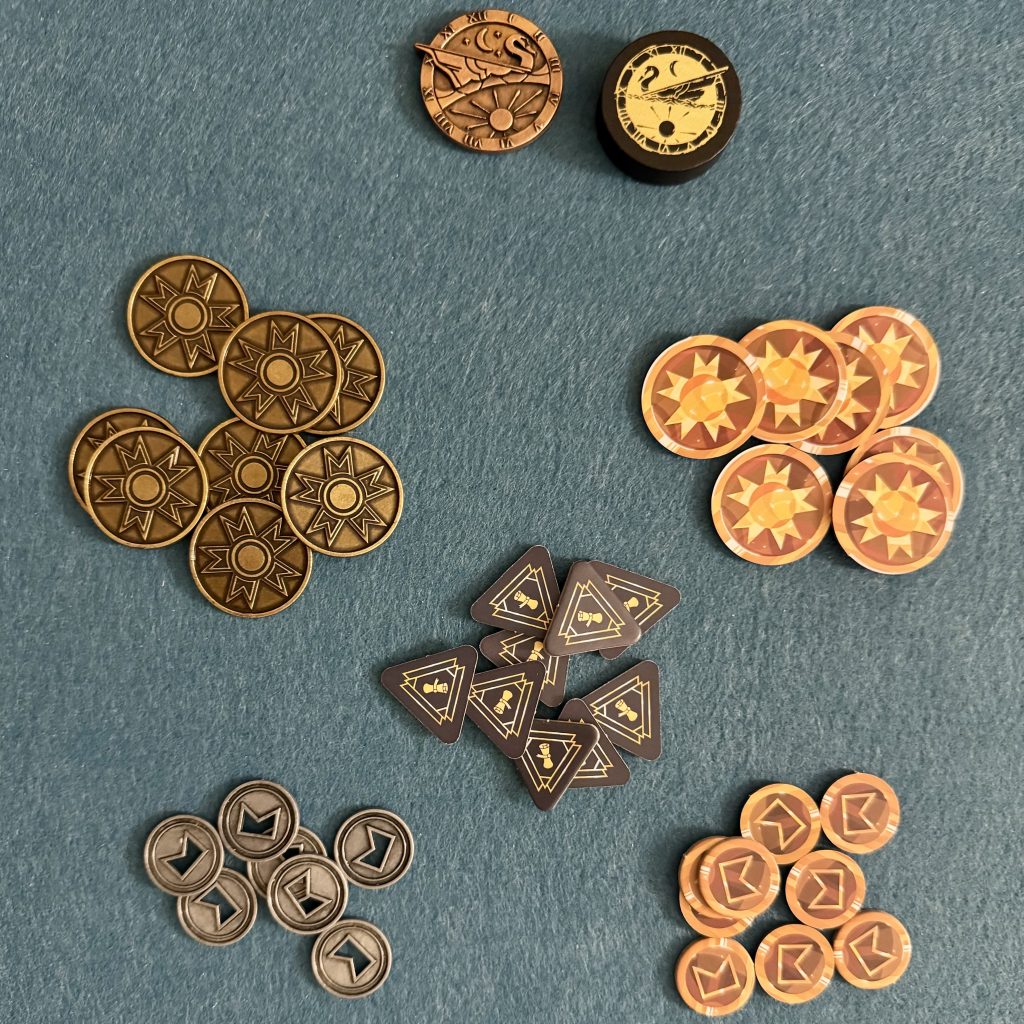
- Components: The cardboard tokens are well-illustrated and the metal tokens have satisfying heft. Artwork across the board is vibrant and the materials are durable, holding up well to repeated play.
- Time Investment: Setup and clean up are quick. Total game length depends heavily on player decision speed, particularly during clash setup and resolution. The most variable and engaging stretch of each round.
- Portability: You’ll need a large table for the boards, but everything fits neatly in the medium-sized game box.
- Recommended Player Count: Two to three players is the sweet spot. At two, every clash is a tense head-to-head battle with no margin for error. At three, chaos and unpredictability enter the picture, which adds to the fun while keeping all players watching each other closely.
Leave a Reply