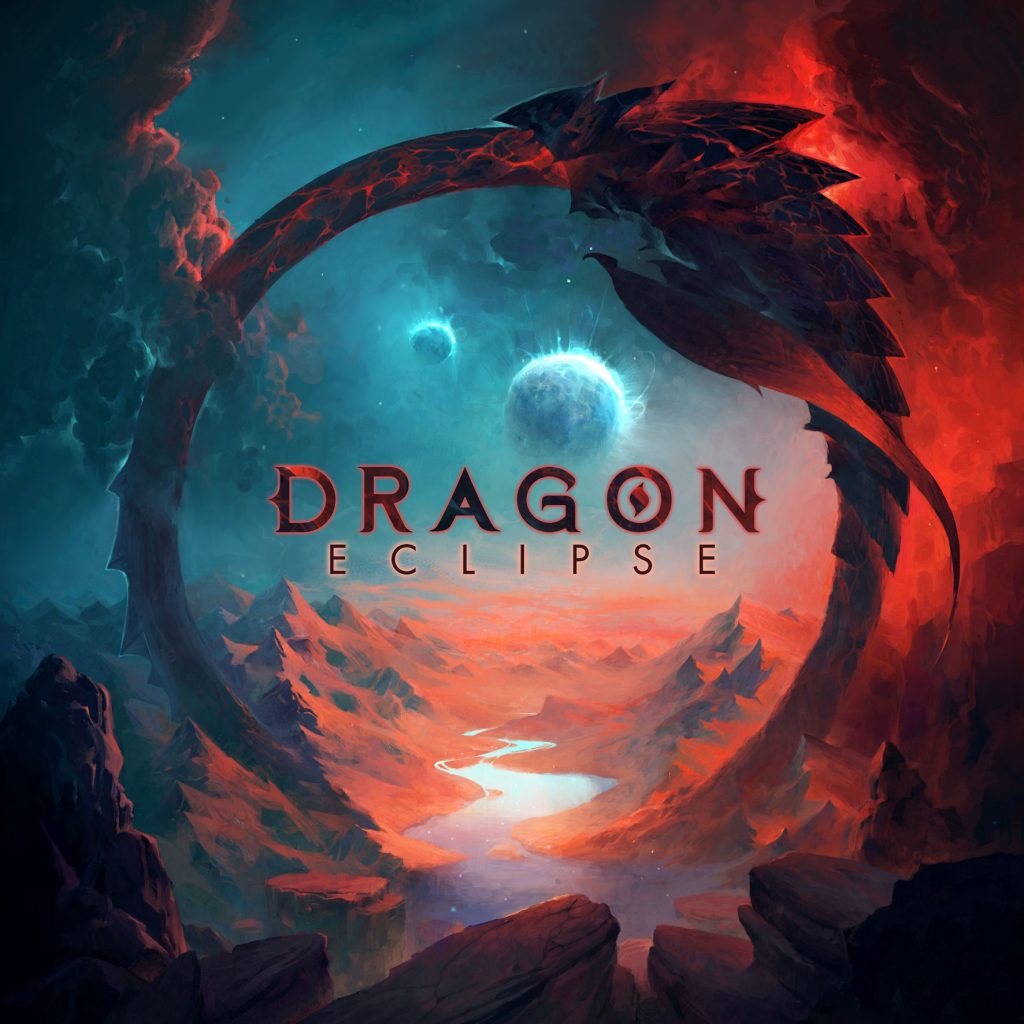
Details
Game Design: Andrzej Betkiewicz, Wojciech Frelich, and Kamil ‘Sanex’ Cieśla
Art Direction: Patryk Jędraszek and Kamil ‘Sanex’ Cieśla
Publisher: Awaken Realms
Player Count: 1-2
Estimated Play Time: 60-120 minutes per Scenario
Box Size: 12.5” x 12.5” x 10”
Quick Debrief
In this cooperative campaign game for one or two players, you take on the role of a Tamer, a gifted individual who bonds with elemental creatures called Mystlings. Each game session is a single campaign Scenario divided into two parts: an Adventure phase where you explore a world on the edge of catastrophe, and a Combat phase where you command your Mystlings across a hex-based arena. Between Scenarios, you customize your creatures’ decks, open new packs of cards, and sometimes watch your Mystlings grow into more powerful forms. The campaign threads it all together across a story of mounting consequences.
I really enjoyed my time with Dragon Eclipse. The Mystlings themselves are the hook. Each has a distinctive design, plays differently, has a distinct card pool, and you can develop their decks to match your personal playstyle. The split between the Adventure phase and Combat phase gives each session a satisfying rhythm, and the reveal of new cards for deck construction is an exciting reward to look forward to. My only concerns are the story having some lackluster moments, and a couple sudden spikes in combat difficulty.
Current Status: Useful Gear (Want To Play Again)
Overall, Dragon Eclipse is a standout adventure game with the insatiable creature collecting hook that Pokemon popularized. I’d recommend it to fans of narrative campaign games, collective card games, and any player who wants to tame fun, wild, and unique creatures.
⬇️ Keep reading for my full thoughts ⬇️
Initial Observations
I had already played Castles of Burgundy: Special Edition before I learned about Dragon Eclipse, which gave me a sense of what Awaken Realms does well: grand gaming experiences with eye-catching components. Dragon Eclipse was pitched as an excellent solo campaign that excited both my inner Pokemon trainer and card gamer. The promise was that you are not just fighting alongside your Mystlings, but you are taking them on a journey to learn about the game world. And the game definitely delivered on that promise.
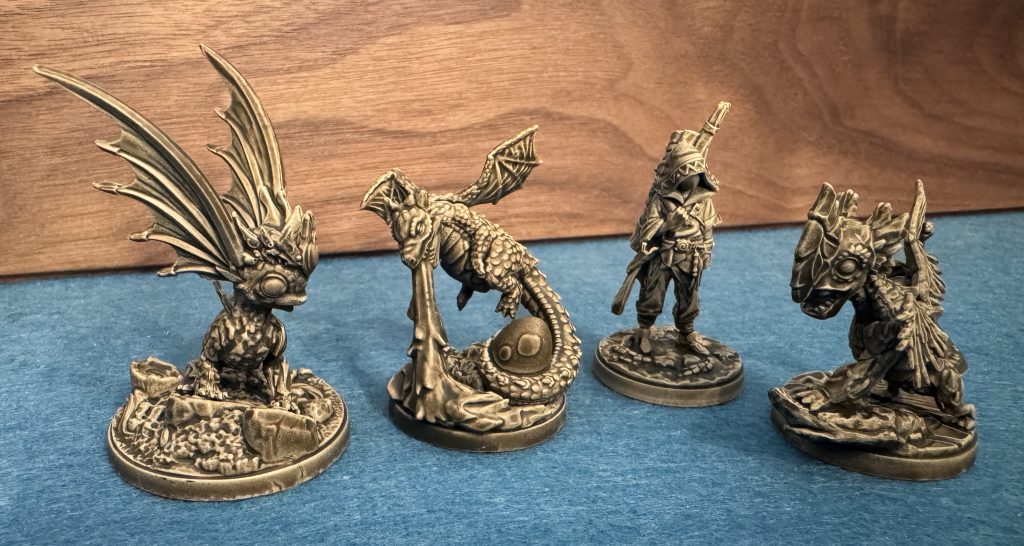
I backed Dragon Eclipse on Gamefound in 2023 and received the Standee Edition with expansions. Soon after receiving my pledge, I sold my collection to upgrade to the Special Edition, which includes acrylic elemental markers, sundrop miniatures in place of cardboard standees, sealed foil booster packs, and a Mystling Encyclopedia binder. My collection also included:
- Dragon Eclipse: #NoMystlingLeftBehind expansion
- Dragon Eclipse: Foray into the Shadow Realms expansion
- Dragon Eclipse: Young Luminesca expansion
- Untamed Arena expansion
- Special Alternate cards created by Karolina Margielewicz
- Dragon Eclipse: Mystling Feat Promo Cards
- Terrain miniature pack
- Arena playmats set
- Combat Deck Box
Gameplay
At first glance, the inside of Dragon Eclipse looks daunting. The game ships with a Start Here booklet for good reason. Before you read the rulebook to learn the rules, Awaken Realms asks you to spend thirty to forty minutes simply organizing the game’s cards and components. And if you like to sleeve your cards like me, then expect this process to take much longer. That time investment pays dividends later, but I want to be honest: the setup overhead is real, and it will test your patience before you’ve played a single turn.
Once you’re past that threshold, Dragon Eclipse reveals itself as something genuinely special.
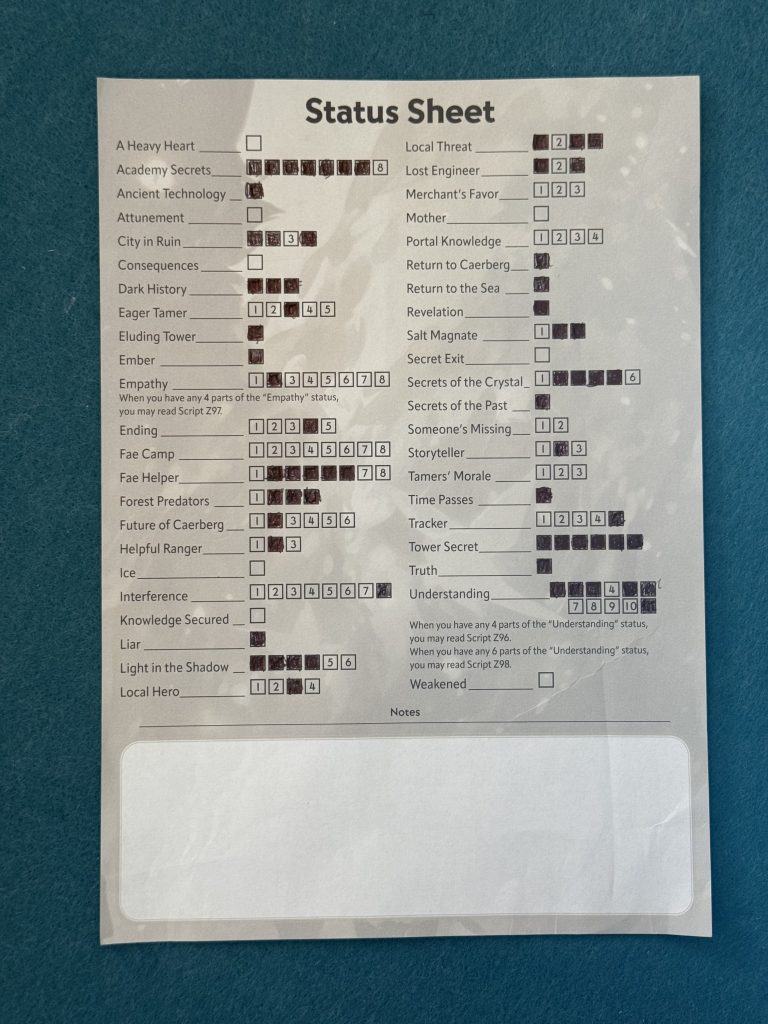
Each game session starts Before the Scenario. You navigate a World Map made up of small cards representing the location you’ll choose to visit next. You’ll unlock new locations to explore as you progress through the campaign. The Adventure Journal, a book that functions as the game’s narrator and storytelling engine, guides you through the whole experience. Think of it as a choose-your-own-adventure book. And thanks to the assistance of the Status Sheet, a single-use document that marks key moments on your journey, the Adventure Journal knows where you’ve been and what decisions you’ve made.
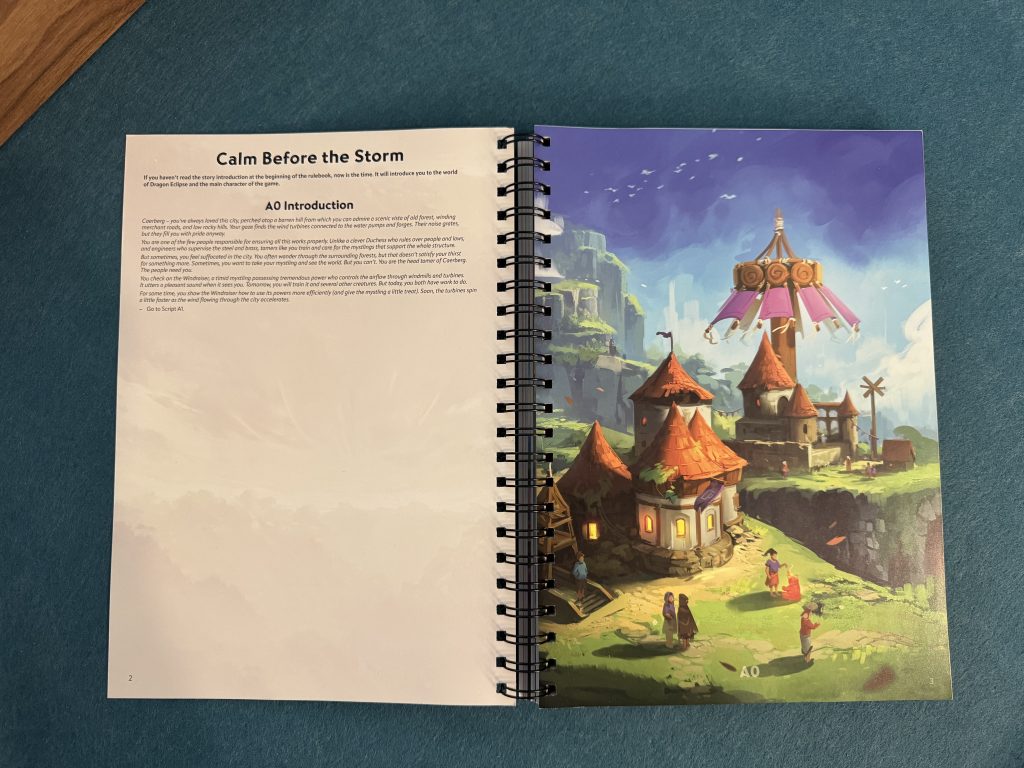
The Adventure phase is where you spend most of your time during a Scenario. You explore maps in the Location book by selecting different Scripts to read from the Adventure Journal. This represents you visiting sites and interacting with characters. These moments include making decisions that will branch the story in ways you won’t fully feel until two or three Scenarios later. Pro Tip: Keep an eye out for hidden scripts on the Location map that will provide some surprise and secret storylines.
The Location maps often have a Time track that limits how much time, or how many Scripts, you can read during a Scenario. This gives a sense of urgency and acts as a reminder that you may not have time to accomplish everything available. Fortunately, you often know how much time actions will take and can plan accordingly. Additionally, some maps have numbered and/or lettered Slots that will track your decisions throughout the Scenario and mark changes in the story. Maybe you’ve spoken to an important person or completed a quest, this will be marked on the Location map and might even lead to scripts becoming locked or unlocked.
To add to the challenge, some scripts involve completing tests, but this isn’t something you can study for. Instead, you use the item deck to flip cards in a push your luck minigame. You can also separately find, purchase, and be gifted these item cards along with stronger equipment cards that may modify your test outcomes. Different outcomes will affect where you go in the story but know that sometimes you can get a positive story outcome, but still face a penalty. Be careful!
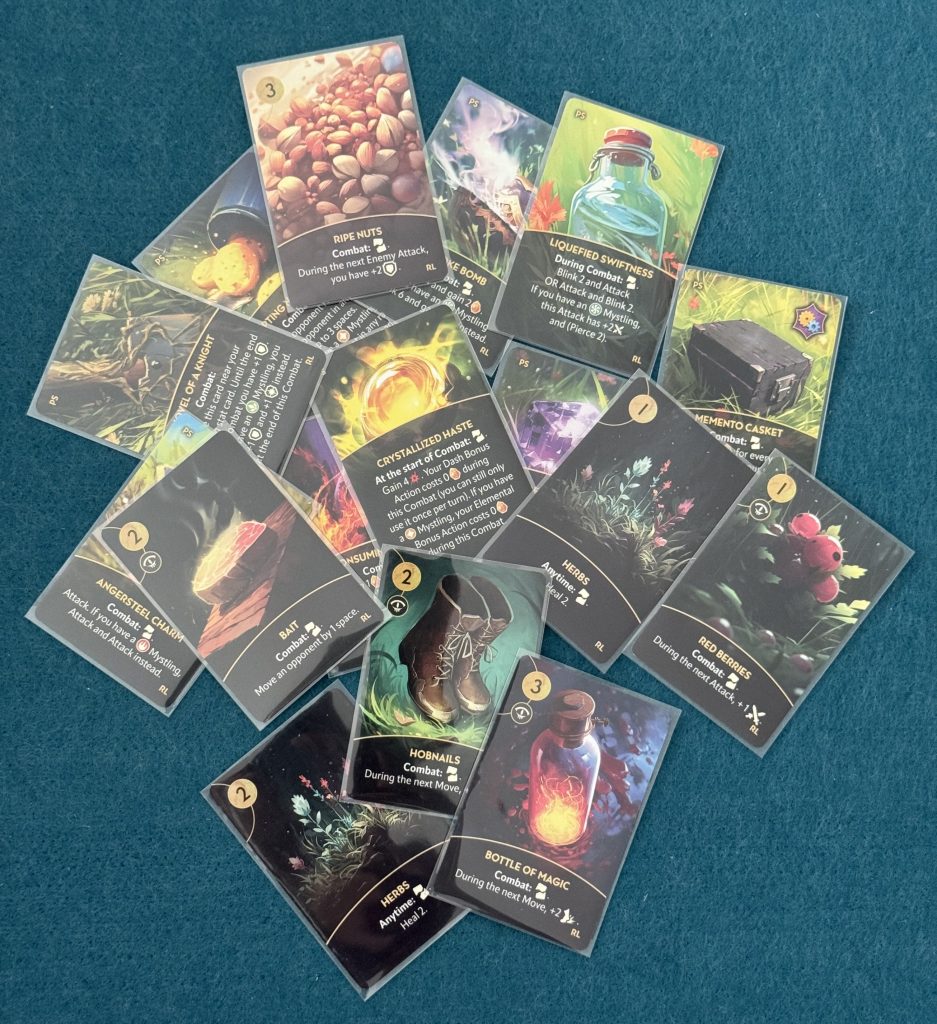
The Combat phase is where the game’s mechanical depth lives. As a Tamer, you will always have two Mystlings by your side, each with their own 16-card action deck that you’ll construct prior to the start of the Scenario. Combat is turn-based and uses a unique system that always displays four of your Mystling’s action cards on the board serving as this game’s version of a hand of cards. On your turn, you resolve one of the four available action cards, gaining the Mystling energy resource known as Power and triggering the action card’s effect. The action card’s position in the four slots also matters. Some effects scale with position and others activate only in specific slots. As your Power accumulates across turns, you will gain access to bonus actions and eventually your Mystling’s Special Ability, a powerful move unique to each creature.
On the enemy side, your opponent Mystling draws and resolves attack cards from its own deck, and you always know which card is coming next. That transparency is a deliberate design choice, and it works beautifully. You’re not reacting to random chaos, instead you’re solving a puzzle under pressure. And knowing what’s coming next doesn’t make the battles easier. Enemies have special abilities and, in general, higher stats than your Mystlings. Additionally, the two-player campaign introduces a targeting system that can make predicting the enemy’s moves all the more challenging.
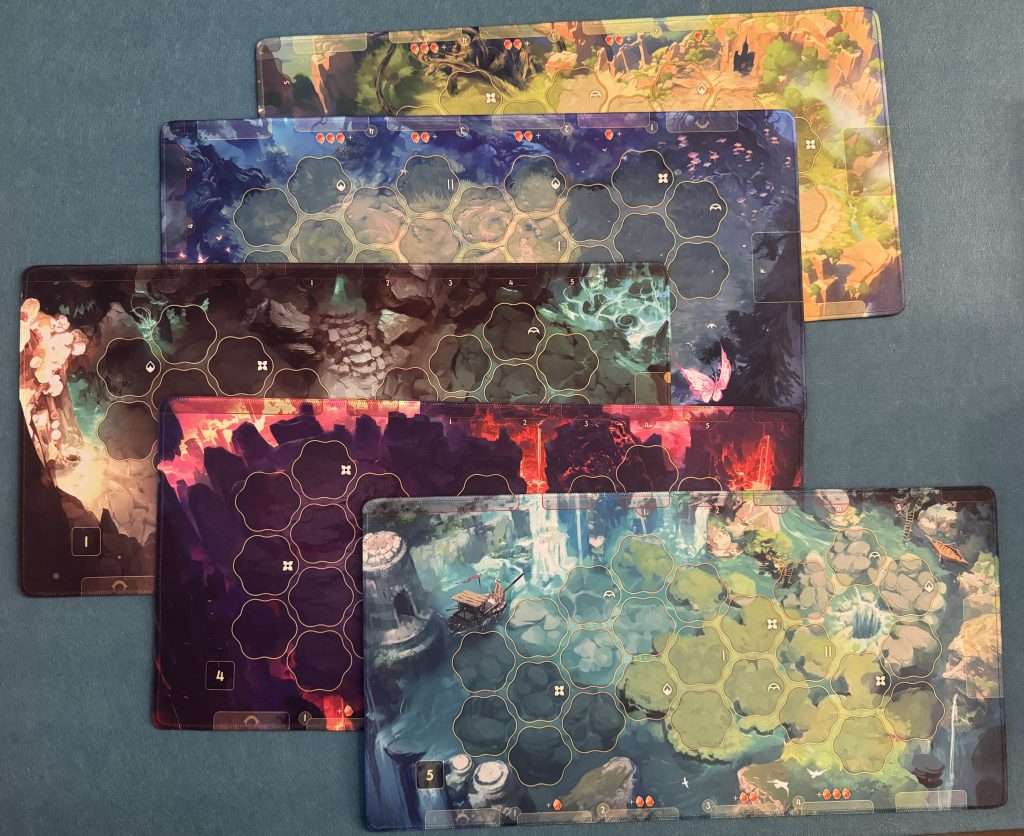
Positioning matters across the hex-based arena. Attack ranges, movement abilities, elemental advantage, and arena-specific setup rules all contribute to a tactical layer that rewards attention. The arena maps change from Combat to Combat, and some come loaded with terrain that can act as environmental hazards or one-time use boons. No two Combats play out the same, even against the same enemy.
The most exciting Combat phases are those which offer the chance to tame the enemy Mystling. Taming requires you to fulfill a series of conditions in a specific order such as inflicting a specific amount of damage in a single turn, reducing the enemy’s health below a target threshold, or ending your turn on specific arena hex locations. If successful, you’ve won the battle and gained a new Mystling ally!
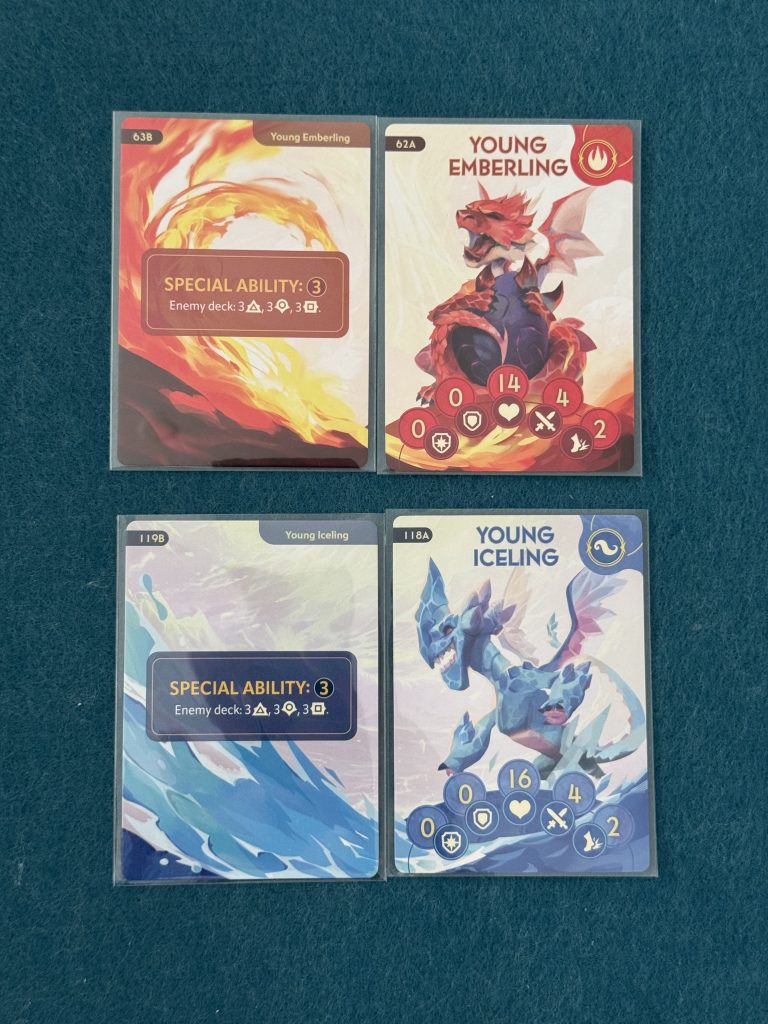
The final step of a game session is the After the Scenario phase which is more than a clean up step. Upon reaching the end of the Scenario, you will gain access to new World Map locations, open Booster packs with powerful new action cards, expand your collection of Advancement cards, heal your Mystings, and have the opportunity to save your game.
Field Testing and Replayability
The opening Scenario feels like it’s designed to immediately let gamers know if this experience will match their interests. While echoing tropes from Pokemon games, you start in a town, get introduced to your starter Mystling, and embark on a quest to save the world. You quickly learn about branching adventure paths, mysteries, battles, and the important fact that your decisions affect and change the world around you.
I quite enjoyed the rhythm of exploring a map, learning about the world, and solving puzzles before a Combat phase where I might have the chance to tame a new Mystling. I also found the deck construction element to be satisfying. The 16-card deck requirement starts to feel challenging as your card collection grows, but I enjoyed searching for combos that match my Mystling’s playstyle. Thinking about how to use special abilities while gathering enough Power all while ensuring you have the necessary cards or resources to move around the map and attack is what makes both the deck building and Combat phase fun. Each slot in your deck is meaningful and impactful.
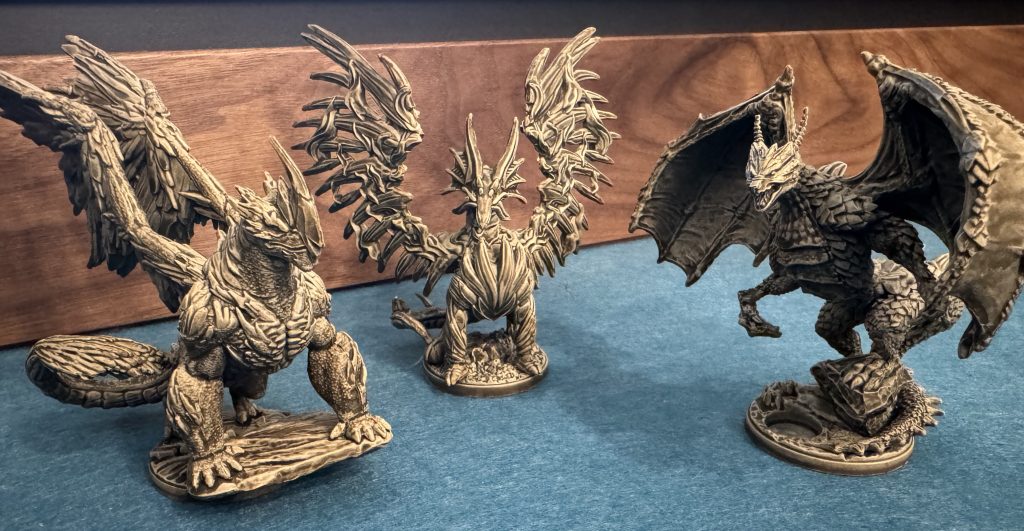
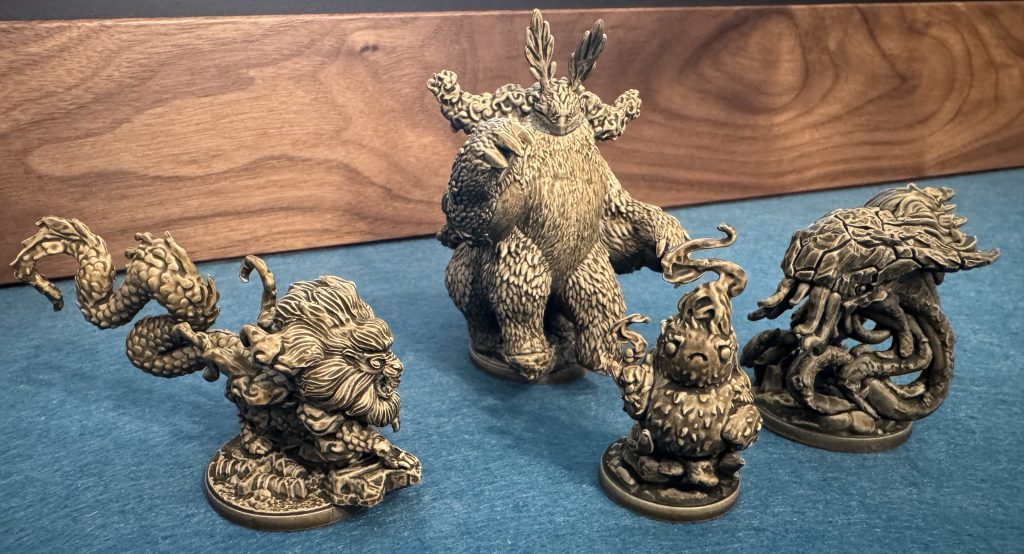
The wide array of Mystlings were cool to discover as well. Plenty of elemental dragons, which isn’t surprising given the name of the game. The Mystlings have a distinct style to them that makes the game feel like a cohesive world while still allowing for both cute and aggressive designs. The fact that some Mystlings can change form adds an additional element to broadening your collection and strengthening your team. And as you tame new Mystlings throughout the campaign, your strategic options multiply.
Full disclosure, I never tried the Roguelite mode, which is available for both solo and two players. It takes the form of consecutive boss fights. I like the idea of using your Mystlings outside of the campaign and testing new deck builds, but I purchased this game with a strong interest in the storytelling elements of the main campaign. There is also a Player versus Player (PvP) mode. While I never tried the PvP mode either, I think this makes the most sense as an added feature to have for casual battles with your unlocked Mystlings and Action cards. PvP really leans into the collective card game nature that helped inspire Dragon Eclipse.
Despite enjoying my time with the Dragon Eclipse campaign, this game has left my collection purely for logistical reasons. Space constraints in my growing board game collection and the time investment required to run through the campaign again affected my decision. In an ideal world, I would continue to enjoy it and build new decks for my Mystlings and hone my skills as a Tamer.
Notable Discovery: The Adventure Journal
The Adventure Journal is the piece of Dragon Eclipse that most surprised me. I expected it to function solely as a script book, a numbered list of passages you look up and read aloud. It does that, but it does considerably more. The Adventure Journal tracks your decisions by placing tokens on the Location maps, locking and unlocking Scripts based on statuses you’ve accumulated across sessions, and occasionally presents choices that feel genuinely consequential.
What impressed me most is how the Adventure Journal manages information. You often encounter a passage that refers to a status or token you placed earlier, sometimes even multiple Scenarios earlier. The game remembers, even if you almost didn’t. It gives the campaign a sense of authorship like the world is reacting to how you’ve moved through it and adjusts accordingly.
The only practical friction: the scripts in the Adventure Journal are not ordered in narrative order so you have to flip back and forth quite often to read the next passage. While a mild annoyance, it is useful to avoid reading ahead and spoiling yourself on what’s next in the story.
Notable Discovery: Booster Packs
This game is just as much about cards and deckbuilding as it is about adventuring and monster taming. At the end of each Scenario, you will unlock new cards through booster packs. If you own the special edition, these packs are sealed in a foil wrapping just like Pokemon or Magic the Gathering cards. If you purchase the standard edition, your booster packs will consist of sets of cards sorted into paper envelopes.
When you open a random booster pack, you’ll receive new and powerful cards of each element that go into your unlocked card pool for future deck construction. And just like popular collectable card games, Dragon Eclipse cards come in different rarities ranging from Common to Legendary. The Legendary cards are not only holographic, rare, and powerful, but are limited to one copy of each in the game and are so impactful that you are limited to one Legendary card per deck.
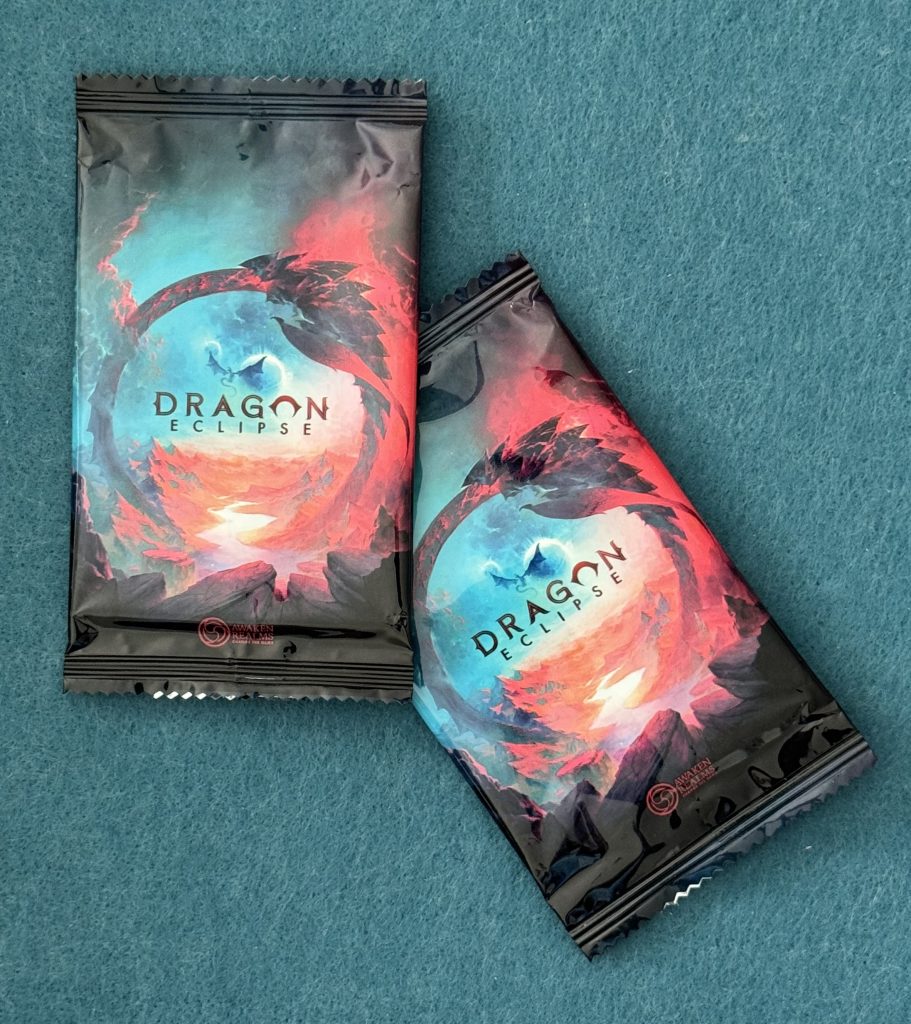
Fortunately, you will never have bad pulls because the booster packs are predetermined. You might not know which one you’ll open, but the game includes a list of cards available in each pack so you can reset the game. Some might be frustrated with the randomness, but I find it exciting to receive random packs that open up new combat strategies, novel effects, and unlock synergies with Mystling abilities.
Observer’s Notes
A word on the unboxing and organization challenge, because I don’t think it gets enough attention in the conversation around this game. The “Start Here!” booklet walks you through it step by step, and following it carefully makes an enormous difference. The giant stacks of Mystling cards, secret cards, and actions cards are intimidating. Therefore, the included card dividers are essential and functional, not decorative, and using them correctly from the start will save you significant time later. You’ll often need to grab secret cards, item cards, equipment cards, Mystling cards, and Combat cards during a Scenario and you’ll appreciate when they are organized and accessible, hence why I am happy with my purchase of the Awaken Realms card sleeves box. Another requirement for gamers who sleeve their cards, because the insert is not designed to hold sleeved cards
Field Report Summary
Current Status: Useful Gear (Want To Play Again)
- Rules Accessibility: Dragon Eclipse includes a “Start Here!” booklet that handles the component setup, and all the instructions needed to start your journey. This approach eases you in comfortably to using the Adventure Journal, performing tests, and completing combat. There are Advanced Rules used in later scenarios that are easy to find in the Rulebook when you’re ready for them.
- Replay Potential: The campaign structure makes each session feel different. And between the branching story paths, random Booster envelopes, hundreds of Actions cards, and a large Mystling roster, you can easily have different experiences between full playthroughs. Plus, there are expansions, a Roguelite mode, and PvP combat to extend the game’s shelf life.
- Components: The Special Edition acrylic tokens and miniatures add to the table presence and immersive experience. The card quality is solid with fun art on the Action cards, however, some of the item and equipment cards have lackluster designs. The Adventure Journal is serviceable while the Location Maps are colorful, detailed, and beautiful.
- Time Investment: The initial unboxing takes 30+ minutes, at least for the Standard edition, as there are a lot of cards to sort through and organize. Subsequent setups are fast and you can dive right into each Scenario easily by pulling out decks of cards from behind the included dividers. Each Scenario runs 1-2 hours once you are comfortable with the rules.
- Portability: This is a big game with a lot of cards and potentially a lot of miniatures. If you have the Special Edition, I would not consider this a portable game.
- Recommended Player Count: I think both the solo or two player modes are satisfying. The two-player rules allow each player to control a Mystling during combat, and share decision making responsibilities during the Adventure phase. I think both modes are satisfying.
Leave a Reply