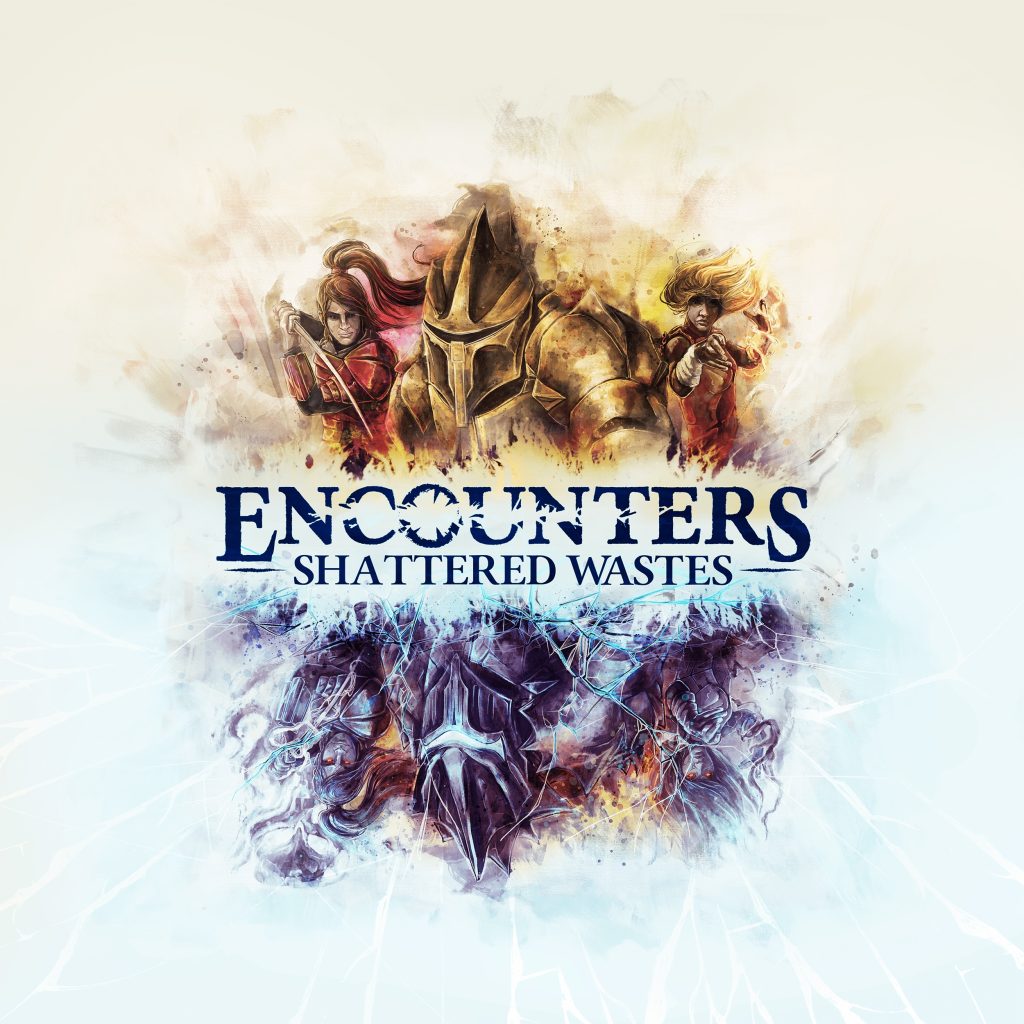
Details
Game Designer: Ryan Farmer
Artists: Elizabeth Kim, Ferenc Patkós, Kasatka Pixel
Publisher: Almanac Games
Player Count: 1-4
Estimated Play Time: 60-100 minutes
Box Size: 12in x 12in x 4in
Quick Debrief
In this cooperative boss battler, players create a team of two to four characters to encounter a single enemy in a battle. If players can survive without losing all their health points or succumbing to corruption, they win! When you are ready to play, you pick an enemy, create your characters, and get straight to the fight.
I like playing Encounters: Shattered Wastes. The pixel art aesthetics are great. The game size is manageable with a satisfying scale that doesn’t feel like a table hog. Each game feels different and there are plenty of strategic opportunities based on team composition, ability cards, and item cards.
It’s unlikely I will play all the game’s content because of the higher difficulty found in half the enemies. I don’t regret backing the game though. I’m always excited to support first-time game creators and I’ve had fun with this game solo and with friends. However, it’s not a game I will go back to often because I don’t want to invest the time and energy into learning to defeat the most difficult enemies.
Current Status: Useful Gear (Want To Play Again)
Overall, it’s staying in my collection for now and I would recommend fans of boss battles or pixel art Japanese role playing games (JRPG) give it a try.
Initial Observations
The excellent pixel art immediately caught this gamer’s attention. Both the art and game mechanics reminded me of classic JRPG battles in Final Fantasy games. I backed Encounters: Shattered Wastes on Kickstarter in March 2023 and received the Deluxe Edition with an alternate box cover. As a Kickstarter backer, I received a foil version of the Crystal Elixir item card.
Additional components in the Deluxe Edition include:
- foil variants of the character cards
- acrylic standees for the characters and enemies
- acrylic activation and enemy status tokens
- a neoprene play mat
- extra dice with a shattered effect
Gameplay and Replayability
One of the standout features of Encounters: Shattered Wastes is the replayability. Each game involves creating a unique version of one of the eight characters. The characters have interesting traits and stats that determine their damage output and how to land a critical hit.
Additionally, players are dealt an assortment of ability and item cards that allow for a custom load out each game. It’s fun to pick cards that align with my preferred play style. For example, the martial ability cards offer powerful attacks to overwhelm the enemy while the sorcery ability cards include both big magic attacks and support skills to help boost the team’s chance of survival. The support ability cards are useful for countering the enemy’s rage cards, and the item cards offer powerful effects to recover health points and strengthen characters.
I’ve played the game about a dozen times both as a solo game and with two players. My games have ranged from two to four in-game characters. The game does a good job of scaling the enemy boss by increasing the number of strength cards they start with relative to game character count. While having more characters on your team can mean more opportunities to deal damage, it can mean a longer battle with more enemy attacks to withstand. The enemy boss does not have health points like the players. Instead, they receive more cards in their deck that can lead to battles taking quite a bit longer to complete.
Players must inflict wounds while the enemy shifts between a guarded and staggered stance. This balance of knocking down the enemy to make them vulnerable is rewarding as it requires careful planning to ensure your attacks cause lasting damage. And even when you beat the first form, the enemy will continue to bite back in its injured state. I like seeing the enemy physically change appearance as well as change its battle tactics. The two forms keep players engaged as you need to adjust your strategy for each form of the enemy.
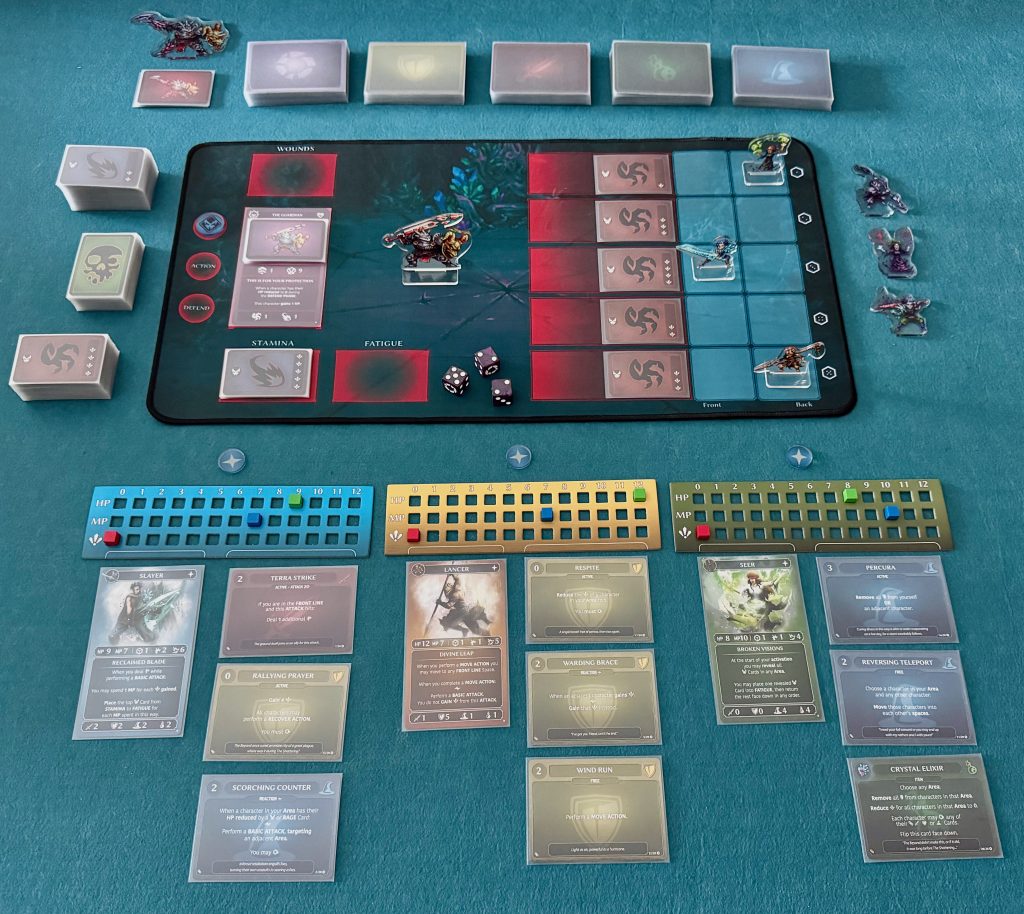
Regarding difficulty, the challenge feels fair and the difficult ratings for each enemy feels accurate. The game rules are easy to understand and the rounds run smoothly with only three phases (Refresh, Action, & Defend). Each character is limited to two actions per turn, but there are plenty of opportunities to trigger special abilities to make for satisfying turns. You can often do more than move and a basic attack. I like that from the start, your character feels powerful enough to damage to the enemy and contribute to the team’s efforts.
While players have to roll dice for most attacks, this is balanced out with the threat level mechanic. Rolling dice felt like more of a calculated risk at worst rather than a constant gamble. As long as you roll a higher number than your threat level, you will successfully hit the enemy. And you can lower your threat level with the recover action as well other special abilities.
However, you will need luck when it comes to the enemy strength and rage cards. These face down cards can have nasty effects like giving out debilitating affliction cards, hitting for high damage, or massively raising your threat level. Despite this, there are multiple ways to prepare for the face down cards and, as they cycle through the enemy deck, you can begin to predict what is coming next. That doesn’t mean a clear victory is always in site nor guaranteed, but the times I’ve lost felt fair. The enemies don’t feel like they cheat to win, but rather are so powerful that you have to be prepared to endure every strike until the very end. I anticipate the most challenging enemies will be less forgiving of lackluster turns or poor planning.
Field Testing
In a follow-up solo game against the Harvester, I changed my team to the Slayer, Seer, and Arrowmancer, leaving behind the Ronin and Monk from a previous attempt. I was rewarded for changing from pure damage dealing characters to a more strategic team with sorcery and item cards. I only knew to change my team composition after a quick loss to the Harvester once it was knocked down into its injured form.
Encounters: Shattered Wastes rewards replaying enemy battles, which is a characteristic I don’t often like in games. I’m usually not invested in one game enough to learn all of the enemy card effects. I also like picking characters that pique my interest rather than basing my choice on what abilities will be most advantageous abilities against a specific enemy. However, when I can commit to multiple battles during a game night, understanding what strategies will help you survive throughout a specific encounter has been crucial for victory. If you’re serious about winning, remember that you’ll need to be considerate during the character setup phase.
I’ve found the box to offer a lot of variability between the eight characters and eight enemies. Honestly, Encounters: Shattered Wastes offers more content than I’ll ever play because the more challenging enemies offer a higher level of difficulty than I prefer during my gaming sessions. I do appreciate having the options available because I may decide to use everything one day. In the meantime, I still enjoy playing the weaker enemies solo or with friends.
Additionally, there is an official easy mode (and ways to make the game harder). The designer suggests starting each character a relic card. These are powerful items from the journey mode that can give your team a powerful boost. I think having this option can make the more challenging enemies fun and interesting for casual players.
Notable Discovery: Journey mode
A quick note about journey mode, which I haven’t tried. Encounters: Shattered Wastes is designed for single, independent boss battles. For those who prefer a narrative campaign adventure, journey mode allows for a team of characters to fight through all the enemies back-to-back in increasing difficulty while retaining ability cards, health points, and any relics acquired along the way. It seems like a fun test of skill and would be perfect for a game group that wants continuity between game sessions. It’s also easy to save progress between battles.
Notable Discovery: The Shattered Mechanic
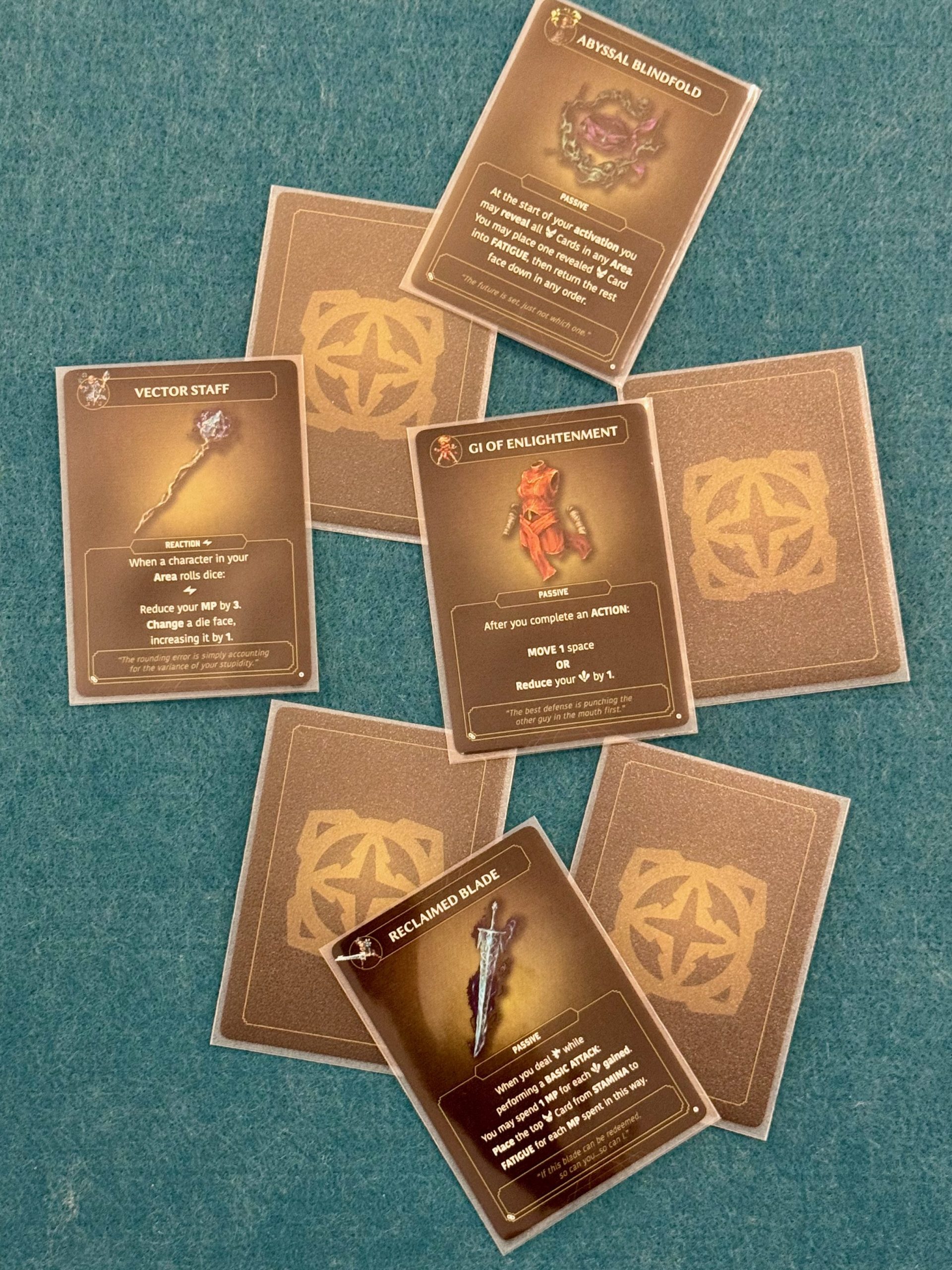
One cool mechanic I want to highlight is “shattering.” In the land of the shattered wastes, when a character maxes out on threat or wants to avoid losing all of their health points, the player board and character card can be flipped over to the shattered side. While the shattered form can save a character from leaving the battle, it transforms them into a glass cannon.
The shattered form of each character has unique traits and stats that are powerful variants of their heroic forms. But by gaining access to shattered ability cards, you must now manage your corruption value (a new loss condition). And yet, this increase in strength can be just what’s needed to defeat the enemy. Overall, I really enjoy the shattering mechanic, because the enemies aren’t the only ones on the board with two forms. It’s also satisfying to know that each character has a second chance to make a comeback against the enemy.
Everyone in this game is susceptible to losing themselves to the corrupted magic in the shattered wastes!
Observer’s Notes
Shoutout to Dión Morales who composed background music for each boss battle. I highly recommend playing the encounter specific tracks during your gaming sessions!
Also, while I prefer the acrylic standees over the cardboard version, they are hard to pack away in the provided GameTrayz insert. A helpful guide was provided by Almanac Games, but it can be annoying to need a guide to put your game back in the box.
Field Report Summary
Current Status: Useful Gear (Want To Play Again)
- Rules Accessibility: This game is easy to teach. However, they may be some complex interactions due to character placement on the board and specific ability cards.
- Replay Potential: This game offers a wealth of content for a reasonable price, and each battle feels fresh.
- Components: Both the acrylic and cardboard components are great. The pixel art is beautiful and really pops. The cards are sturdy and easy to read.
- Time Investment: Unfortunately, there is a slight delay between creating your character and initiating the battle. Be prepared to make multiple decisions during character setup. This can be fun for some, but tedious for others. Additionally, if you have the acrylic standees, it may take a while to pack up the game properly.
- Portability: All the game components including the neoprene playmat fit in the box.
- Recommended Team Size: Two to three players controlling three characters seems to give the best balance of strength and variability in team composition.
Leave a Reply